


Talent Talks: Libby Milne
Introducing Talent Talks, the podcast where we dive into all thing’s talent in the real estate, construction, and infrastructure world. From the boardroom to the building site, we uncover the stories, insights, and people shaping our industry today. We shine a spotlight on data centres, one of real estate's fastest-growing and most in-demand sectors.
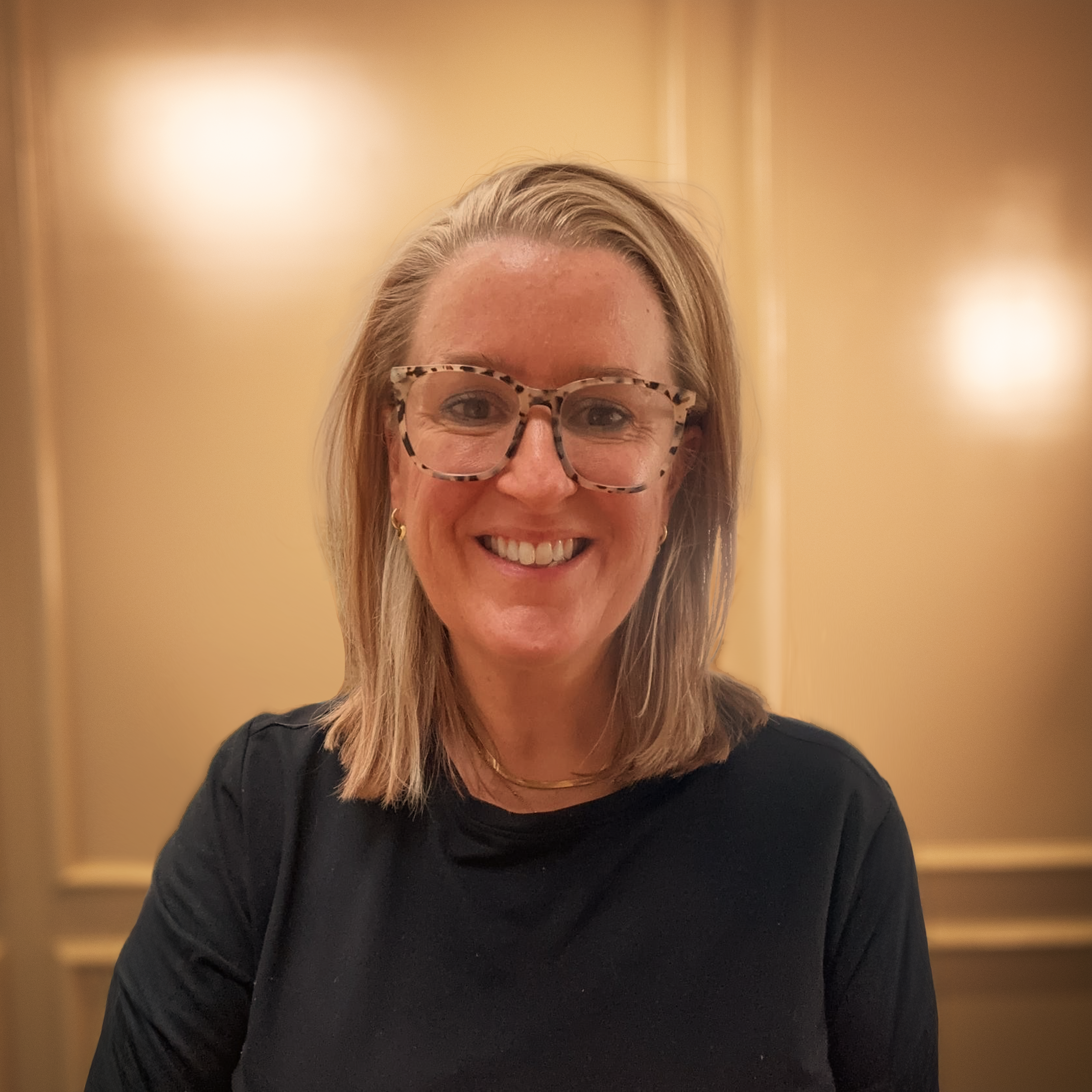
In this episode of Talent Talks, Sarah Davenport and Oli Coote sit down with Libby Milne, a Delivery Manager at Radiant and responsible for the successful delivery of multiple data centre projects across Greater London. She is also the co-founder of the Forum for Women in Data Centres, which aims to build a community and network that provides a comfortable space for women in the data centre industry to build connections and cultivate relationships.
Today, we’ll be exploring Libby’s career journey, the realities of delivering complex data centre projects, and her insights into the future of the sector.
Watch this episode on YouTube:
Listen to this episode on:
You can read the transcript of the discussion below:
Sarah Davenport
On today's episode of Capstone Talent Talks Podcast, we are joined by Libby Milne, a senior project manager in Buro Fours’ Data Centre team, where she works on the successful delivery of complex mission critical developments. She also plays an active role in initiatives such as Critical Careers and is a co-founder of the Forum for Women in Data Centres.
Today, we'll be talking about her career journey, what it really takes to deliver complex data centre projects, and why creating a more diverse industry is critical to the future of the sector. Libby, welcome to Capstone Talent Talks.
So let's start at the beginning. Talk to us about how you got into project management and the data centre sector?
Libby Milne
Hello. So much to my parents' dismay, I jumped around in education. I went to sixth form, went to college and started doing a sports science degree, but after two months, realised I could not see myself having a career in that, in any way whatsoever.
After I dropped out, I worked for a year, trying to figure it out. I was working at a school in Switzerland and on one of my visits back, my Dad took me to one of the construction sites that his company was working on. So he was a contractor and they had an open day as part of the Considerate Constructors Scheme.
I was just speaking to everyone there, having a look around and everyone was just really passionate and lovely about their careers and answering all my questions. I think it's a bit contagious when people are so passionate like that. You find it really interesting and it's really curious I was looking at models, bin models that were just a complete blur to me of colours and lines at that stage. That was probably...twelve or fifteen years ago, actually.
Sarah Davenport
Did it bring it to life? Did it create something? You know, it obviously triggered something in you that felt more compelling than the sports science.
Libby Milne
Yeah, exactly. We didn't really talk business at home. So this was the first I'd actually seen my dad really talk about work and to see his environment. My Mum used to be involved as well because they used to actually work for the same company. Hearing them talk about their work and hearing about their experiences, I started thinking this might be something that I could be involved with. When you hear about actual people's careers, I think you can see yourself in it more.
I applied through Universities clearing schemes, because I had missed the deadlines, applications and signing up for all of that process. So it meant that I was talking to the course leaders themselves. One of them actually was in civil engineering and kindly said I don't know if this is necessarily for you. But he suggested construction project management. So looked into those courses, got onto one of them and it stuck. And here I am today as a construction manager.
Oli Coote
Was your Dad a construction project manager as well?
Libby Milne
Oh, he was on the commercial. He was an Estimator; they called it back in the day. He's just retired actually, and I think he ended as a something to do with bids?
We used to bump into each other at networking events around Cambridge.
I love networking. You're going to seminars, learning about projects in and around Cambridge. We didn't discuss in advance that we were both going. So I’d see him and I be like, oh, hello Dad. He’d introduce me like “This is Libby, she's a project manager” and then start chatting away. Then halfway through the conversation say, “This is my Daughter.”
Sarah Davenport
It's a strange path to tread, isn't it?
Libby Milne
Yeah, I don't think he wanted them to think he’d just brought his adult daughter along for a free drink. But it was funny and it was just really nice. It makes it a lot easier when you have that familiarity in the room.
Oli Coote
So then how did that go into the data centre side then? Obviously, you got your degree and then how did that sort of lead to where you are today?
Libby Milne
So I worked at a company called Bidwells in Cambridge and there I was doing a variety of projects which were residential. I've also done labs and offices and defence fit perfectly into doing a data centre project. I started working on that maybe three or four years ago and I've just been on it ever since. During that time, I actually transitioned full time into the data centre team, so now all of my projects are data centres.
Sarah Davenport
So when you're working on those projects, you're looking at these, in very simple terms, huge sheds, there are lots of different specialisms that feed into building those. So on a day-to-day basis as a project manager, what are the main professions that you're working with and building a team around?
Libby Milne
So at the start, it will be an architect, an electrical engineer, structural engineer, cost manager, and probably like a planning consultant as well. I think that forms our core team. That will get you through RIBA stage one and two and then we'll get up to three and start bringing more people in for ground investigations, refurb and demolishment surveys about asbestos or health and safety. You're just picking everyone up along the way and they’re getting on your bus towards the end of the project.
Sarah Davenport
So, you're dealing with everything from the pre-con right through to PC? Have you got a preference? What do you what do you love the most?
Libby Milne
I love the construction stage. I haven't designed or done any of it, it's the fantastic designers and engineers that have done that. But seeing what I've been working on for the last year or two years, maybe longer, depending on how well your planning is going, actually come to life. As someone who doesn't come from a technical background, it's really interesting. I think my biggest learning point is in that stage where I get to point at something and say “What is that? What is that doing? What's that pipe? Where's it going?” The people who have designed it and are building it, they come out of their shell and well actually that is your chiller system -they love it. But it's fun and I learned really well that way. I like being able to follow up with questions immediately and I think I like it the most because that's where I was learning the most.
Oli Coote
Right the way through that development, you're that kind of central piece, there's other people coming in to play their part, but once they've done and they move out. You're the one that is there from day one, seeing it right the way through to that's all signed off and here are the keys.
Libby Milne
Yeah, I like having that project life cycle and being able to see it through. There are a few core people that do it with you, just depending on how you run your contracts and how you've appointed people to monitor and see the project through. But it's wild because I've recently just come to the end of a project so I’m like why is no one talking to me every day anymore? Where have you all gone? I thought we were besties.
Oli Coote
So a typical day for you Libby, is it meetings? Is its on-site or is it inspections? What does that kind of look like for you?
Libby Milne
At the design stage, it's a lot of working with the designers and seeing where they're at. When we're coming to a deadline and we need all of this stage 3 done, I’m seeing how we are getting on. Then during your procurement stage, they're having those discussions with the contractor and just pushing those bits along. But I think the most regular days I have is during that construction period, because as a project manager, I'm checking on that progress against the programme. I'm seeing if there are any changes, checking the risk register, if mitigations were in place, what actions need to be done or need to be closed out. A lot of contract administration as well.
I'd say you don't have a typical day, but you probably do have a typical month because you've got to do a certain amount of actions and report on it. You've got to do the same next month, so you get that familiarity and you can actually get into a bit of a rhythm with it.
Sarah Davenport
I'm a massive questions person and that's why I like recording these because I just get to ask lots of questions. But how do you find that when you're working with other professions with different personalities and ways of thinking and communicating? How do you navigate that or is that all part of the joy of it?
Libby Milne
I think, like you said, I can be quite an intense person for those who don't know me, as in I bring a lot of energy right on your doorstep. I think sometimes I do need to remember to bring different versions of myself to the table. Sometimes it could be like a really energetic conversation, and I ask loads of questions, but other times it's okay, right, we've got this problem, let's have it out.
I've watched people and I've learned from them and picked up on their energy. I was like, okay, we're a bit more holding back today because we're talking about very serious contractual stuff or we've got something we need to resolve. Learning when and where is the right version of yourself to bring, that's a really key skill that I needed to pick up pretty fast, especially on data centre projects.
Sarah Davenport
When it comes to some of the broader industry, agendas and communities that you're involved with, talk to us about the brilliant Forum for Women in Data Centres. How did that come about?
Libby Milne
I love it. Someone I was working with on a project had recommended me to their colleague who was looking at setting this up. So that was Ola from SNHA and Barbara from Cundall, together with a couple of other people, we started having a conversation about there being something missing and to just to bring that community together and that support.
At events, women are there but there are a lot of men. What we spoke about originally was to try and increase that male presence but also create a space where we can just flip it so that some men get to experience what it is like to be the minority gender in the room.
We started off with just drinks and it was 40 people. What do people want to see from us? What do you think you need? What are your annoyances? We just had people write it down on post it notes and that sort of formed the basis of what we are looking to put on for people.
A lot of it was mentorship. So we've been able to start a mentorship scheme and that's going really well. It's pairing people in the industry with some really great female mentors that they might not have been able to get from their own company.
We do lots of drinks at the expo events and conferences, because you go in there and then it's just a sea of suits and it's quite hard. So it's quite nice to put everyone from our community in that space together. Then they sometimes just go walk around the conference together and they partner up with people there.
It's just giving them that confidence to be in that space. So I think you come away from our events feeling a bit pumped and it's like, yeah, I'm going to go tackle that. This is the person I need to go talk to at that conference. I'm going to go find them and have it out with them. We’re also really pushing to get women on panels and not just talking about being a woman in the industry. Because there's so many women who've got their technical backgrounds, they're engineers or they're working in STEM or consulting or designing and they've got really good inputs. So pushing to get a lot more of that on panel events and that's next year's drive as well. Really going for it, so watch this space.
Sarah Davenport
Brilliant.
Oli Coote
I think FWD is a brilliant example of one of the changes that's come about generally in the industry over the past few years. Those sorts of new communities that are being created. Just from your perspective and what you’ve seen, whether it's communities or events or from a development perspective as well, have you seen things progress or maybe evolve over the past few years within the industry?
Libby Milne
I've definitely seen a lot more women at events. From my own experience, it's been nice to see more familiar faces. That would have come anyway, because the more you go, the more people you meet. But it has been nice seeing a lot of the younger women turn up at our events, and then I might bump into them elsewhere, whereas typically I might not have recognised them.
You do get drawn towards the people that you know at events. On my projects, a lot of them are male, so I will go towards the people that I know from my projects at events, and I'll see them there and I'll go talk to them. So it's nice to have
had a bit of a clearer meet people from different backgrounds at different companies at the FWD events and then recognise them in other spaces. I think that's the biggest change that I've seen. And, you know, younger women coming up through that.
Sarah Davenport
Beyond the mentoring or bringing people up behind you as it were, was there anything that the community was bringing up thematically that is worth us discussing and understanding more about?
Libby Milne
Massively. One of the reoccurring ones is timings of events - so parents can make them. I think a lot of the evening events don't always work, so it's trying to figure that out. So we put on coffee mornings and just make sure that it's not always Thursday afternoon or evening and just try to mix it up. So make sure the days are different because, you know, Thursday might be football, Thursday might be swimming, and you don't want to mess up your kids' routine.
If you make sure that it's not just routine events on this day, at this time and at this place, mixing that up means it works for different people. From the beginning, as a parent, I can't come after work because that's my time with my childcare commitments, but I might be able to come in the morning for a breakfast event.
Sarah Davenport
That's so interesting.
Oli Coote
I guess if they're pretty regular as well. Like I can't make that one, but it doesn't matter because I know that there's going to be another one in a couple of months. That kind of consistency as well makes a big difference.
Libby Milne
Yeah, exactly. Also having the opportunity to start right after work. So if you have to be home later, because not everyone works in London, so it's making sure that they have time to maybe pop there straight after work. So you start at that 5pm or 5.30pm, get that fixed and then can head off. Now we're also looking at more locations while hosting our events. I think, but I don't want to speak too soon, maybe up north. I know that's a very blanket statement.
Sarah Davenport
I'm sure that'll be really well received.
Libby Milne
Yes. I think there's so many people that are like “Sorry, I've got to catch a train.” I'm one of them. I'm about an hour and a half out of London, but it's just so nice to see everyone and be around everyone and catch up with them that you want to make it work. So it's just having that earlier and it's not even that much earlier.
It's just making sure you're there before it starts so that people can feel welcomed into the space, have a little connection, chat, catch up and then leave feeling like it was worthwhile.
Oli Coote
I think there's a good mix of people as well, in terms of like people in their careers. You know, you've got people that are just sort of starting out and you've also got really, really established, people in their careers as well. So it’s great that you've got that spread across the board. To have that opportunity if you are starting out, how great is that? You know, you get to kind of walk in, and you just feel like, ah right, okay. You talk about mentorship. I mean, it's brilliant to be able to see that, isn't it?
Libby Milne
Yeah. Actually at a GeN+1 event, someone I know had some graduates in her team. She goes to them, “who do you want to speak to? Let's make it happen” and they'd actually noticed people on the panels, and it was okay, I can make that happen. I know that person and supporting them and being there with them to make that introduction and to make that approach - I love the idea of that.
Sarah Davenport
I know that something that you've spoken about on other forums is around being your own advocate, and that you have to speak and be thought of. So when you are looking at your career and the trajectory that you're hoping for, what are you excited about for your career moving forward?
You’ve obviously seen so much of the ecosystem and have lived in different parts of it. What are you, what are you excited about that the data centre world can offer you?
Libby Milne
I think one of the things that's always sort of haunted me is the technical side. Because I was looking at civil engineering side and I was nearly tempted to get into mechanical electrical engineering and I never did, I think one of the things that excites me is being able to increase that knowledge of mine, whilst maintaining the job I have. I do love my job, and I love delivering projects as a project manager.
I think the fix that I’ve finally found from the data centre industry is being able to build that technical knowledge and understand things and be in spaces, understand how it fits together, how it works and what's next. It is fascinating to me, and the benefit is I don't have to go into the absolute deep depths of it and figure out the formulas and equations and how it works. I can just be like, oh, that's interesting.
Oli Coote
It comes back to all those people you're involved with right the way through the project, doesn't it? There's always someone you can think what's that and actually just get that bit more knowledge, you know?
Libby Milne
Yeah, and it's nice to be able to understand things, the bigger picture wise. Because as a project manager when you are life cycle, it just means that things are likely to come up on another project that have happened on others. Being able to have a chat with the professional for a little bit longer than you would have, means that when I come round to that issue again, I know what I need to do because I've had that time with them. That might have only been 20 minutes, but that 20 minutes means I can see something that might be about to happen, and I know what my next steps need to be. So all these people that I've dealt with, I'm enormously grateful because they've helped my career.
Sarah Davenport
That's great.
Oli Coote
So, if you were going to kind of sit down with someone who was earlier in their career and just given what you've, learned along the way, is there any kind of advice that you'd give them where you wish maybe someone had given you early in your career? Or any advice that you'd pass on to people a bit earlier?
Libby Milne
Have your questions. If you're in those meetings, I know it's not going to feel like it's the right time or space for you to interrupt them at a graduate or a junior level, but maybe just write your question down. Then afterwards, speak to your manager and they might have the answers.
But if you think of something that you want to ask a question of, but it's not the right time or space, store it. Don't forget that because you wanted to know and you want to know for a reason. So make sure that you get your questions answered. I’ve been working with Mike Cowley for the last couple of years. Oh my gosh, the questions he's had to deal with for me. He's done a really good job and sometimes what I like from him is when he's been like, I don't know the answer, let's go ask.
Sarah Davenport
We all learn through other people's questions.
Libby Milne
Yeah, exactly. Through that, in my larger meetings or site walks or whenever I'm around people, I now have the confidence to ask it and how to ask it. Because sometimes I think you don't understand everything you need to ask the question to get the answer that you want. Because when I started on data centres, this was all so, new and so heavy on mechanical and electrical. I didn't know half the components, and I didn't know half the words or the acronyms for goodness sake. To build my question, I had to ask 50 other questions.
So be a good note taker. When you're in your meetings, obviously focus on what's happening. But if there are bits that you need to do a bit more information and a bit more research on, just jot it down, let me come back to that. And then it fills in your bigger picture later. One of the massive things that I am consistent about is, I’d talked to Mike a lot, saying this is where I feel like I'd like to develop. Either he said, right, me and you, let's have a workshop for an hour or two hours, and we'll go over it in detail, and we'll get you sufficient and proficient doing this or let's get you on a training course.
At my company, we have an allowance each year so we can identify a course and maybe I'll get some advice from my manager saying, do you think this is a good one to get this bit of knowledge so I can work on my contract awareness or my programme awareness? Then they really support me and say, the content on that one is not quite relevant to what you're doing day-to-day, but this course someone else has taken and it was really beneficial. So let's put you on that one instead.
Oli Coote
Yeah, that curiosity, isn't it? It's that curiosity of just thinking, okay, what is next and how does that work and how does that feed into what I'm doing? And I would imagine, when you're working on a data centre delivery project, everything is changing the whole time. With the advances and everything as well, it's just continuing to change quite quickly. So you have to kind of have that approach, I suppose, because even if it was the case last year or two years ago, it's probably going to be different now and next year. So it's kind of, it's always going to be evolving like that, isn't it?
Libby Milne
Yeah, and on that, I think it's really important to make sure you understand why things have happened and why it's gone that way. So from my perspective, managing contracts, you've got your base build contract, so that might be for the value of 300 million. That's just realistic, isn't it? You know, we've got this base build project for 300 million, but your fit out is only 20 million.
But for speed, you want to embed that into your main build contract as a variation maybe. But then it's, okay, well, if we're doing that, what's that changing to our base build? What are we losing or what needs to change? You know, our warranties, our liabilities, and it's thinking what happens to our programme? And, you know, there are decisions where you decide not to put that as a variation and have its own standalone contract.
So that was a situation that happened to me. And one of the things I was just like, why? Why have we done that? So I managed to have a sit down with my manager and they did explain that process to me and we did it this way because X, Y, Z. I think that's what I wasn't really doing before. I was sort of just taking the decision as verbatim and just crack on, I'll do whatever next. But I'm now at this stage where I'm understanding things to a higher level. And if I want to keep continuing and keep progressing, I need to understand why we've done something, what options were available otherwise and if this situation came about, how it could be applicable.
Sarah Davenport
I think ultimately, it's going back to that two-year old's curiosity, isn't it? And it's because that's what we need in order to build the foundations to then go to the next stage of the career. So I think, Libby, what you've done an amazing job of in this is, you’ve made a sector and a role, that is often quite elusive and general, feel really tangible. And as a visual person, I think that that is so valuable to people listening to this who are thinking about careers in project management and how it all intertwines and, the output and the different sorts of decisions that you're having to make.
I think you've done that unbelievably well and better than better than most people that we speak to on a day-to-day basis. So, thank you for that, because lots of people are speaking to us who are early in their career and they're wanting to understand, right, what does this pathway lead to? What is the reality of that? So thank you for bringing that to life for us.
Libby Milne
Thank you. I think when I was at the beginning of my career, it's so hard to find those opportunities when you're starting off because you don't know what companies there are. You know the big names, but obviously everyone's applying to the big names. I was fortunate enough to have companies recommended to me by my Dad who was in the industry at the time. But you know, to be able to find something right, I was able to find a recruitment agent that helped me find the right role for me at that at that beginner level.
So I think I think it's great that there are people discussing with you at the beginnings of their career, because a lot of it, they wait until you're 5-10 years in. It's good to hear. I'm happy about that.
Sarah Davenport
It's really, really valuable. Libby, thank you so much for talking to us. We really appreciate your time and your generosity in doing so. So thank you.
Libby Milne
It's good to hear. It's good to hear. I'm happy about that.
No, thank you. Thanks for having me.
Oli Coote
Thank you, Libby.
Related Insights
\\

