

Talent Talks: Kyla Small
Introducing Talent Talks, the podcast where we dive into all things talent in the real estate, construction, and infrastructure world. From the boardroom to the building site, we'll uncover the stories, insights, and people shaping our industry today. We shine a spotlight on data centres, one of real estate's fastest-growing and most in-demand sectors.
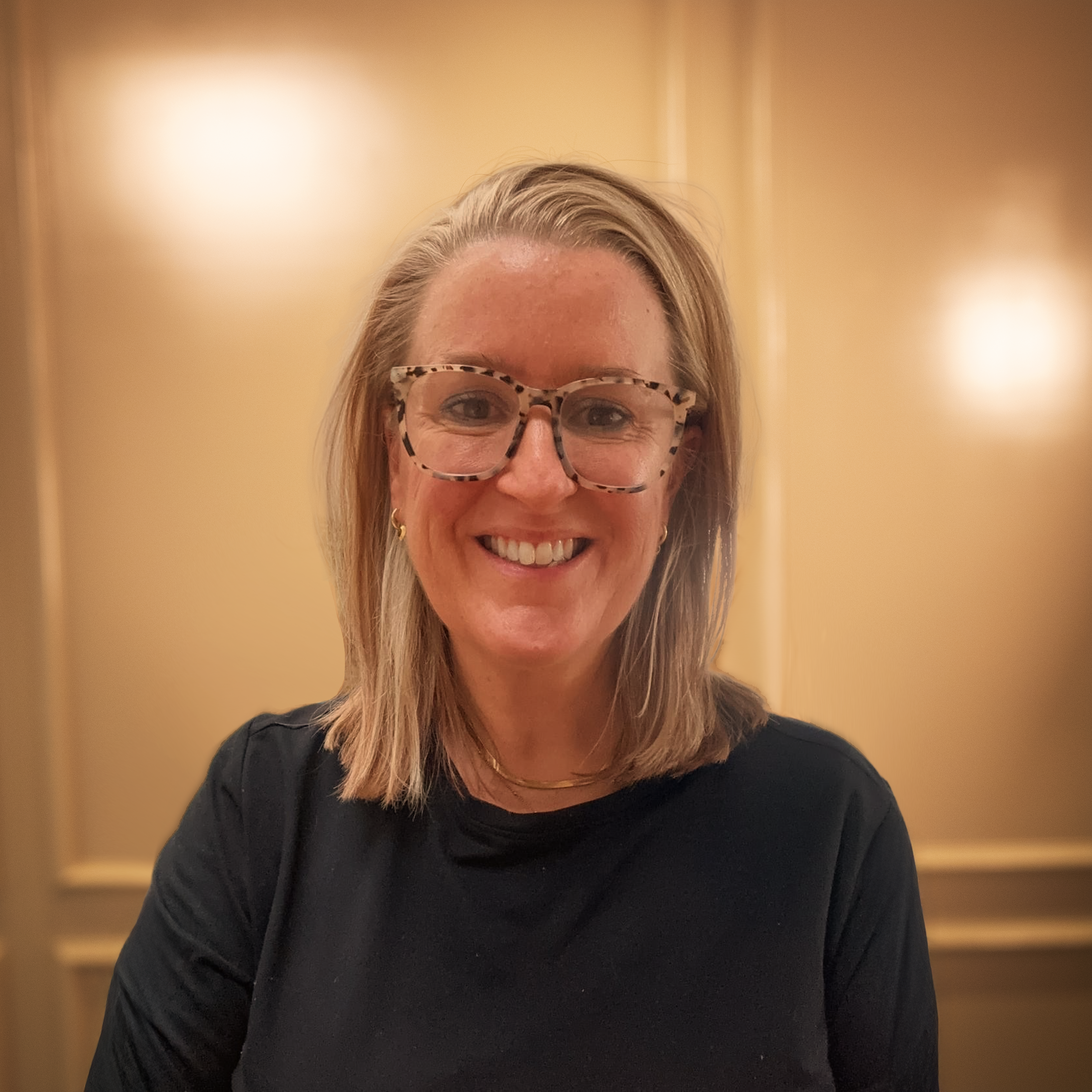
In this episode, we speak to Kyla Small, an IBX Critical Facilities Apprentice at Equinix UK, who recently featured in the Critical Careers book of publications celebrating the people powering our digital infrastructure. Kyla provides a unique perspective on the power of hands-on learning, having secured one of only 11 apprenticeship places from a pool of 600 applicants, and she highlights how inclusive workplace cultures and supportive cohort environments are essential for attracting the next generation of talent to the male-dominated, fast-paced sector.
Watch this episode on YouTube:
Listen to this episode on:
You can read the transcript of the discussion below:
Sarah Davenport
Today on Capstone Talent Talks podcast, we're thrilled to be joined by Kyla Small, an IBX Critical Facilities Apprentice at Equinix UK.
Kyla recently featured in the Critical Careers Book of publications, celebrating the people powering our digital infrastructure. With the average UK data centre engineer being 54 years old and just 3% of the current data centre workforce aged 18 to 24, we’ll explore Kyla's journey into data centres through an apprenticeship pathway in the hope that this encourages others to consider the same route.
Kyla, thank you so much for joining us and welcome to the podcast. How are you?
Kyla Small
I’m good, and I hope you’re both well.
Oli Coote
We are, thanks for joining us, Kyla.
Kyla Small
Thank you for having me.
Sarah Davenport
Let's start at the beginning. How did you find out what a data centre was and the apprenticeship options? Talk to us about how you got into this.
Kyla Small
I was lucky enough that my dad works in the same industry, so if it weren't for him, I wouldn't have had a clue. I think a lot of people who don't work in this industry wouldn't even know about it, so that's how I kind of knew about it. And the way that I got into the apprenticeship was I kind of wanted to get into it, but I didn't know about the apprenticeship side, and I thought “how do you go into this?”, because obviously there's not really a college course or anything that when you come out of school, you can go into.
So luckily, through LinkedIn, my dad posted on LinkedIn and just said, "Does anyone know how you get into it?" And one of the HR members from Equinix actually commented and said, "We offer apprenticeships. I can get talking to her, explain to her what it's about and all of that." And I actually managed to get a tour around one of their sites up in London at Acton.
It was really nice. I went and had a tour. One of the engineers there was actually female, so she spoke about her experience, how she found it, because obviously it's quite a male-dominated industry, what they do day-to-day in their job roles. And then I went for, I think it was two interviews for the apprenticeship, so it was a group one and an online Teams call. And I got offered the job.
Oli Coote
What stage was that for you, Kyla? Were you at college, at school? Like, where were you at in terms of your kind of next step in what you were looking to try and do, and how did that kind of fit into all of that?
Kyla Small
I left school, and I started an apprenticeship doing something completely different. It was in dog grooming, and I didn't mind it, but I just couldn't see myself doing it for another 50 to 60 years, and I thought I'd better stop now that I've realised rather than carry on. And then I was just looking around wanting something hands-on. I thought maybe a mechanic, electrician and then obviously my dad working in the industry, it's a good opportunity because it's such a growing industry. And I thought if I can get into it, it's a good thing to get into.
Sarah Davenport
Absolutely. Did you do that after sixth form or instead of sixth form?
Kyla Small
That was instead of sixth form. So, I've been out of school, I want to say maybe a year, just over a year, definitely not long at all.
Sarah Davenport
Oh, great, so you got into it really early. In terms of the pathway in, first of all, it's great that your dad works in the sector because you know it exists. Most people don't. Is he an engineer as well? What does he do?
Kyla Small
Yeah, he started off as an electrician, just a domestic electrician, and he's worked his way up, and he's part of the operations team. A similar kind of role to what I'm doing. So, that's where I kind of got that idea from, I think.
Oli Coote
And did you have much of a sense of what that day-to-day might look like from your dad? I'm only thinking about this from my own personal experience. Like, if you ask my son what I do for a living, he's not going to have any idea about that. He's a bit younger. But I'm just wondering how much you kind of knew what your dad does, and then to a degree, what the whole kind of data centre industry is like? And then moving into that, did you have a sense of that, or was it only through actually just finding out a bit here from your dad, a bit more there, and actually then speaking to Equinix, and it snowballed?
Kyla Small
Yeah, I think it was just a bit of everything. I had a base idea from my dad, but he's more like the admin side, and he's worked his way up. Whereas what I'm doing now is more hands-on. So, it was good to speak to the Equinix staff, like the techs and engineers who are doing the job that I would be doing. Yeah, you hear different things from different people and learn different things from different people. So, a bit of knowledge from everyone.
Sarah Davenport
It's interesting, though, isn't it, actually, because I was just thinking about it when you raised a point earlier. It's not really the sort of industry where you can get loads of work experience because it's so confidential and it's such a closed industry. So, actually, the opportunity to go up and see inside a data centre when the Equinix team did that for you is a great opportunity. And I know that Microsoft have almost a data centre simulator where you can go and see, in theory, as it's not a live data centre, but you can get a feel for what it's like and the opportunities in there. And that's the only way, really, that you can bring that to life, I suppose.
So, in terms of the apprenticeship scheme, were you clear that you wanted to go into the hands-on side? Were you really strong on maths and sciences at school, or was it potluck as to what you ended up in, or was it a clear route?
Kyla Small
I kind of had my head set on I wanted something hands-on. Even though my old apprenticeship was quite different, it was still a really hands-on job, so I was adamant about that. I was like, I can't be sitting in an office all day. I don't want to be doing that. And from school, I was quite good at maths and science and things like that, but I just thought that if you put your mind to it, you can do anything. So, give it a go, see what happens.
Oli Coote
I was just thinking about that process as well, in terms of what you were finding out when you first had those meetings with Equinix. What were your expectations going into that? Did you kind of have a sense of what that would look like as a process or how demanding that was? Or was it a kind of not collaborative in a sense, but they were also engaging you and actually sort of trying to bring you along that journey as well. How did that kind of feel, stepping into that process with them?
Kyla Small
I didn't really know what to expect when I went, but when I did go for the interview, Equinix are taking on 24 apprentices, so there were a lot of us in the same boat. And the group interview is very supportive, and you all work together. So, it was nice to have that bit of support and to know you are all in the same boat. Don't worry if you don't know anything, what's going on, or anything like that.
Sarah Davenport
That's brilliant. So, do they take on 24 each year?
Kyla Small
No. So at the moment we've got two cohorts. I want to say it was 10 or 11 in 1 cohort and roughly about 14 in the other. There was talk about bringing more in, but obviously, 24 at once is quite a lot. So, I think we're going to wait a few years and hopefully bring in more.
Sarah Davenport
Do you know how many people applied for those 10, 11, 12 places in your cohort?
Kyla Small
I can't remember exactly, but I want to say roughly 600 people around that sort of mark. We started off with the group interview. So, that kind of narrowed it down quite a bit. I think just to see everyone's kind of social skills and how interactive or how eager you were. And then once we had that group interview, we went on to individual interviews.
Sarah Davenport
Wow, really?
Oli Coote
Oh, really.
Sarah Davenport
So, the group interview, first of all, I can't believe 600 people knew what a data centre was, so that's amazing in itself. But also, what was the group interview, so we can prepare others for what might happen at that stage?
Kyla Small
I know I can't believe that either. Yeah. So, I wouldn't really say it was like an interview setting. It was just kind of a group of maybe 10 to 15 of us in a big meeting room. And we started off just in pairs, talking to each other about ourselves, just fun facts about us, what we were doing previously, what made us want to come into this industry, stuff like that, and then we shared just with the people that worked at Equinix just to see how our social skills were, how confident we were, stuff like that.
And then we did an aptitude test. I don't know if you've ever heard of one, but it's just like a simple maths/science test, nothing too complicated. We did that for maybe half an hour to an hour, and then we just went on a tour around one of the buildings. A lot of us who were doing the interview had never actually been inside a data centre, so it was just nice to see, if we were going to go for a job, we wanted to know what we're getting ourselves into.
Sarah Davenport
Yeah. That's great. And then from there, they whittled it down.
Kyla Small
Yeah. So, from there, I don't know how many people it went down by, but they got that down, and then we all had Teams interviews just with a couple of people, and that was a bit more of a personal interview about yourself rather than all just in a group in a meeting room.
Oli Coote
Wow. And then at that point, you got the sort of final decision on it, is that right?
Kyla Small
Yeah, so after that Teams call, maybe a week after, I got a phone call, just to say you've been offered the job, we'll send your contract through with all your details.
Oli Coote
Well, you've got to be pretty pleased with 600 down to 12. I mean, that's a real result.
Kyla Small
Yeah, I was definitely happy about that.
Sarah Davenport
Oh, that's brilliant. Do you have any siblings? I bet he's like getting the next generation through! That's brilliant. Oh, Kyla. I've absolutely loved this conversation. And it's so new for the industry in terms of lifting the lid, which is what we're trying to do here. Is there anything that you would like to share that surprised you about the sector that you think people should know? Obviously, we've talked about the range of career opportunities and how welcoming everybody's been. Is there anything else that you think people should know?
Kyla Small
I would just say how, I'm guessing it's the same for every company, obviously I can only speak for Equinix, but just how fast-paced this industry is. As I said earlier, you learn one thing, then by a week there's something new going on. So, it's just constantly changing all the time, and you just have to be on the ball.
Sarah Davenport
Yeah. So, it'll suit people who are fast learners and aren't put off. Do you know what, actually, a random fact here, but we were approached last week about an AI course for business owners run by the government. It's a 15-month course. I was like, what they're going to teach you in week one is going to be irrelevant by week 6, let alone month 15. It was just so ridiculous. I was like, I don't think that's quite up to date. But that's brilliant. So, if you're interested in fast-paced, if you like on-the-job learning as well as the more formal kind of college learning as well, then you'd definitely recommend the apprenticeship route.
Kyla Small
Definitely. Yeah. Yeah. I don't regret anything about taking the apprenticeship. I definitely think it's a good route to go down.
Sarah Davenport
That's great. I think it's amazing. I think I'm definitely encouraging my oldest to start considering that as well.
Oli Coote
Yeah, definitely. No, you've done really well there, really well, Kyla.
Kyla Small
Thank you.
Sarah Davenport
Yeah, that's great. And tell us, for people who don't know much about apprenticeships, tell us what one is and how it's structured in real life. Is it for a set period of time, or is it all on the job, or is there any kind of college learning?
Kyla Small
Yeah. So, it's very similar to going to college or going to university, but the difference is that you're more based on-site at work rather than in a college or a university. So, for us, it's 4 days on site and then 1 day at college. The days that we're on site, we're hands-on, basically doing the job with all the techs, just trying to get stuck in as much as possible. Obviously, there's a lot to learn, so it can be difficult, but it is good to learn the job rather than just reading it on paper and then trying to do the job.
And then yeah, the college day, the one that we have is in units. So, we'll focus on a subject, and then at the end of that subject, we'll sit tests on it. And that's how we go through that. The whole course is roughly about 4 years, give or take.
Oli Coote
OK, and are you all in that together? Are you all on the same work pattern, go to college on the same day, that type of thing?
Kyla Small
Yeah. So, the 2 different cohorts go on separate days because we're at separate levels, if that makes sense. But yeah, all doing the same thing. We've just got a class full of Equinix people. The 11 people that are in my year are just the 11 of us at college, which is good because we can all just focus on one thing rather than different people from different companies, which sometimes I think can get a bit confusing.
Sarah Davenport
That's amazing. So, is it a college or is it a training provider that runs it?
Kyla Small
It’s Newbury College. But they partnered with Equinix so they can take us on. The actual college course isn't designed for data centres, which isn't ideal. It's just an electrical course. But obviously, just having Equinix students, they're able to kind of link it back a bit more to data centres rather than it being like a general lesson.
Sarah Davenport
And actually, you've then got the 4 days a week where it is all data centres, and you can apply what you're learning. And the other people who are in your cohort, what's their background? Is it similar to yourself?
Kyla Small
It's very varied, I'd say. So, you've got a couple of younger ones that are my age, maybe a year younger, just come straight out of school, and then you've got a couple of older ones that had jobs previously and just wanted a bit of a change and thought this was the way into it.
Oli Coote
And so the plan is then you're on this 4-year pathway, and then do you know what is at the end of that specifically, or is it a case of from an Equinix perspective that might change in that actually you've sort of trained in this, so that's going to put you down that sort of pathway? Or maybe because of that training, you could do that, or you could do this. Do you know what that kind of might look like in a few years' time?
Kyla Small
We have been told that with data centre companies, a lot of them are quite big, and there are a lot of job roles in them. They said once you're in the industry, there are so many different parts that you could go down. It just depends on what you want to do, really, in the future. I think for me, I'll stick sort of down the same route, but there's definitely so many opportunities. If you wanted to switch to sales or marketing or whatever, it would definitely be easy, I think, after doing an apprenticeship rather than moving straight into it.
Oli Coote
You're going to have such a good network, aren't you? Because not only are you going to know people within Equinix, but also all the people who are on the apprenticeship with you as well. Kind of day in, day out and everything like that. In kind of moving through together, that's going to be great.
Kyla Small
Yeah, yeah, definitely.
Sarah Davenport
So, a final thing on the apprenticeship scheme, just for others who are listening. So, you're paid a salary presumably for the days that you're working. That's a great way if you're looking at leaving school, but you still want to be learning a trade, as it were.
Kyla Small
Yeah. Personally, I think that's better because you're actually learning the job. You're still learning because you're in education, and you're getting paid to do it. So that's a bonus, yeah.
Sarah Davenport
Presumably that's a great way to do it. Win-win surely. Excellent. And what did it mean to you, Kyla, when you were featured in Critical Careers?
Kyla Small
I was just really grateful to have the opportunity, especially this early in my career as well, and it's nice to see all the other women and be inspired by them and just see the potential opportunities that you can have in the future. So, it's really nice.
Sarah Davenport
Yeah, because I suppose if you're looking at everybody else that's featured in Critical Careers, it makes you realise what your opportunities are, presumably?
Kyla Small
Yeah, definitely. Because a lot of the people who are featured in the book have started out with apprenticeships or started at the bottom, just worked their way up. So, hopefully one day that'll be me.
Sarah Davenport
Are you planning on staying in the sector?
Kyla Small
I think so, yeah. Like Oli was saying, even if I want to change paths or anything like that, there are a lot of opportunities in this industry. So, I definitely think I'll stay within the industry even if I want to change it up a little bit.
Oli Coote
And then within Equinix itself, at the moment, and how I guess you're supported as part of that programme, do they have sort of like an internal kind of mentor, and what's that structure like when you're actually there? Because you obviously go to work each day, and I guess you've got a kind of line manager and they're taking you through and you're doing this, that and the other, but equally, there's that kind of training element to it as well, perhaps. And how does that kind of work?
Kyla Small
Yeah. So, all the apprentices at Equinix, 24 of us, we're all spread across different sites. So, I think on my site, there are 3 apprentices at the moment. We all have two supervisors on each site. So, you'll have your own supervisor or line manager, whatever you want to call them.
And then, for all of us, we have kind of a mentor, a woman named Tracy. She kind of deals with all the apprentices. So, if we have any problems about college, training, or any questions, she's kind of our main point of contact for that. Everyone's really helpful, to be honest, not just line managers, but engineers, other departments in the buildings, and office staff. You get friendly once you've been there a little while with people, so it's nice.
Sarah Davenport
That's great because it's your first foray into work generally, so you're not only learning a hugely technical profession in terms of the on-site engineering, but in a very complex environment, and it's your first job beyond the kind of jobs that you have when you're younger. So, it's a hugely formative period of time for you, I suppose. And what would you say to other women, in particular, young women who were thinking about careers within data centres? What would you say to them about the career opportunities and your experience?
Kyla Small
I would say just go for it. Honestly, I know some young girls or women might be thinking, “Oh, it's a really male-dominated industry. I don't know how I feel about that,” but I don't feel any different to any of the males that work in the office. They include you in all the banter and show you any work that they're doing. I honestly don't think it's any different at all. And you're just as capable of doing the job. So, yeah, I'd say just go for it.
Oli Coote
It must give you a huge amount of confidence as well, I'd imagine, just in terms of actually, you're working, you're learning, you're moving into an industry that's, or you are working in an industry that's growing, that's exciting, it's dynamic, there's a lot happening, there's change every day. You know, compared to maybe, I think what can be quite challenging for younger people these days is finding what that next thing is, after school or university. But you know you've got yourself into a really good position.
Kyla Small
Yeah, I think when leaving school, it’s a hard age to decide what you want to do, but it's such a growing industry, and I do think that in the future, like I've said a lot of times, there are so many opportunities, whether I stay in this or do a different role, whatever. It's just nice to know that I'll always hopefully kind of have a job.
Oli Coote
That's true.
Sarah Davenport
And I think for your first one to be so supported and practical, and in the fastest-growing sector in the world. That's a great route to have taken. And what do you think, I mean obviously your experience is just with Equinix and they're an unbelievable organisation. But what do you think, as an industry, from what you know, we can do as employers to prepare for the next generation of talent? What can we do differently? What can we do better?
Kyla Small
I think personally, introducing more apprenticeships. I know across the industry there are university-equivalent apprenticeships, but especially for people like us who are coming straight out of school, I don't think there are many companies that offer apprenticeships like that. I don't know what other routes there would be to get into it, but yeah, I definitely think that would be a good opportunity, and it's also good for the companies because people are learning their ways and just building confidence, which they want for looking after their building.
Oli Coote
And in terms of the data centres themselves, because again, you kind of walk down the street and ask people what a data centre is, and you're going to get a bit of a mixed response. And I suppose, you know, if we're again trying to attract younger people into the industry, have you got some thoughts there on what might make that a bit more attractive, appealing, visible? You know, in terms of trying to bring younger people into the industry. Obviously, you've kind of got in there super early on that apprenticeship and all the rest of it, which is great, but trying to make that a bit more visible, what are your thoughts on that?
Kyla Small
Yeah. I would just obviously bring in apprenticeships, but I think the main point is there's just so much to learn. If you're one of those people who just constantly want to learn, don't want a boring job, because I know a lot of people my age has a lot of energy, just eager to do their jobs really. It's definitely a good industry to be in, because even the people who are qualified, you're going to be constantly learning, and there are constantly new things going on, AI being one of them; it's a growing thing.
Oli Coote
Yes, it is linking, isn't it? It's linking that kind of evolution in AI with the fact that data centres are there to actually make all of that happen, so that in and of itself, making that maybe a little bit more widely known and appreciated and all the rest of it, all of a sudden starts to make it a bit more interesting and appealing to people that actually don't have a huge amount of recognition or understanding about data centres at the moment.
Sarah Davenport
I mean, we need loads more younger people because if the average age of an engineer at the moment is 54, that's not just a pipeline issue. That's a critical infrastructure issue, isn't it, because they're 10 to 15 years off retirement. We need to be attracting more people in, and it's really interesting because I was trying to find out today how many apprenticeships there are within the UK data centre industry, and I actually can't find any data on it.
So, I'm going to take it as a personal mission to try and find out a bit more information on it because I know that Equinix, there are a number of interesting apprenticeship schemes, but I think a lot of data centre developers and operators are so busy with the day-to-day and the rate of change and keeping up that we need to tackle the kind of pipelining issue now, in order to not be on the back foot then, but it's a constant juggle, isn't it?
Kyla Small
Yeah, definitely.
Oli Coote
From a networking perspective as well, you're obviously in Critical Careers that you're featured in, and you've got your cohort of apprentices at Equinix. Are you part of anything wider, broader than that for younger people within the industry? Is there anything like that at the moment that you're kind of a part of or that's doing good things that you're aware of?
Kyla Small
I'm not aware of anything, but we have done a few events within Equinix where we've had schools in, and we've finally just explained what data centres are, done a few activities, taking them on tours just to kind of widen the knowledge of data centres, if you want to say. But as you said, not many people actually know about this industry, and we need more young people coming into it. So doing things like that, going into schools or youth clubs or anything like that, just to kind of tell people what it is and what it's about.
Oli Coote
And if they see people who are earlier in their careers within it as well, that makes it more relatable and achievable, doesn't it? As opposed to perhaps more senior people going in.
Kyla Small
Yeah, definitely. Yeah, I think it's just nice to share our personal experience of being younger in the industry rather than, say, a 40 to 50-year-old male as well. If there are females, it's going to be a totally different experience from what they might have at a totally different age and gender.
Sarah Davenport
Definitely, definitely. And you should check out Gen Plus One. Are you aware of them?
Kyla Small
No, I haven't heard of them before.
Oli Coote
Oh, definitely, yeah.
Sarah Davenport
Oh yeah, we'll send you the link because they are an unbelievable network of young people within data centres. And I don't know if you're into running or anything like that, but they've got a padel club, they've got a run club, and they do loads of brilliant career discussions as well. So, they are excellent, and it looks like great fun. Sadly, Oli and I are way too old; they don't accept dinosaurs!
But you should definitely check out Gen Plus One because they're doing some really good work. Yeah, because then you'll meet broader people. And I think that you've obviously got a great network within Equinix, and actually learning from other career paths in other organisations and meeting other people who are similar to yourself would probably be really, really good for you.
Kyla Small
Yeah, definitely. I'll have a look into that.
Sarah Davenport
Kyla, thank you so much. We've absolutely loved talking to you and hearing everything about your career so far, and there's loads of exciting stuff to come, and we can't wait to watch you from the sidelines.
Kyla Small
Yeah. Thank you for having me.
Sarah Davenport
No problem.
Oli Coote
Thanks very much, Kyla. Great to have you on.
That was an inspiring conversation with Kyla Small, an IBX Critical Facilities Apprentice at Equinix UK. Her journey into data centre engineering at a young age demonstrates the power of apprenticeship pathways to open doors to dynamic careers in critical infrastructure. She shared how connections and LinkedIn outreach led her to Equinix, where she secured one of just 11 places from 600 applicants, highlighting the competitive yet accessible nature of these opportunities. Kyla's experience underscores the importance of hands-on learning, supportive cohort environments, and inclusive workplace cultures in attracting young talent to a male-dominated sector. Her advocacy for expanding apprenticeship programmes and increasing visibility through school outreach reflects a passionate commitment to addressing the industry's critical talent pipeline challenges. We are extremely grateful to Kyla Small for joining Sarah Davenport and Oli Coote on Capstone Talent Talks.
Related Insights
\\