

Talent Talks: Elena Simonova
Introducing Talent Talks, the podcast where we dive into all things talent in the real estate, construction, and infrastructure world. From the boardroom to the building site, we'll uncover the stories, insights, and people shaping our industry today. We shine a spotlight on data centres, one of real estate's fastest-growing and most in-demand sectors.
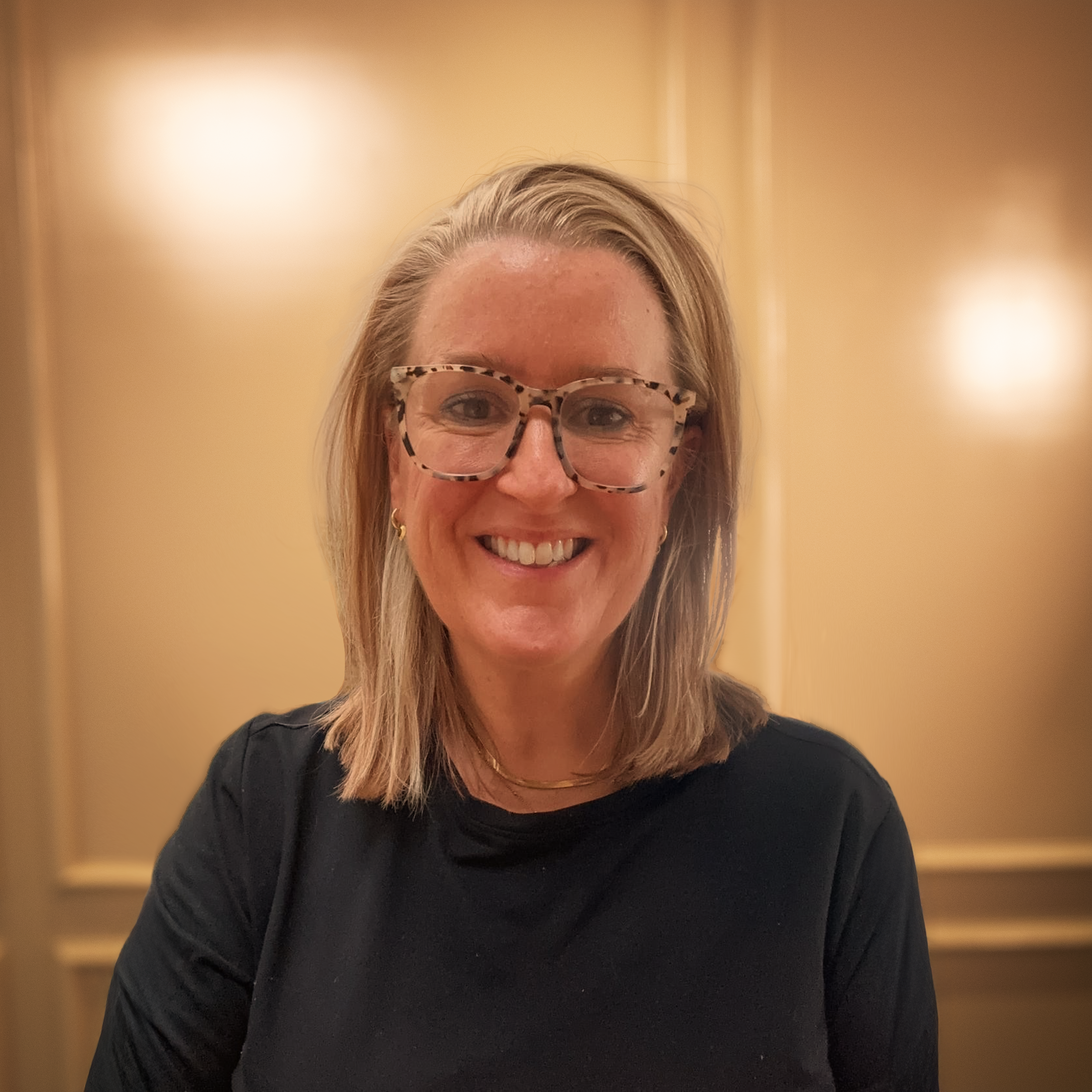
In this episode, Sarah Davenport, Managing Director at Capstone, and Oli Coote, Data Centre and Real Estate Sector Lead, speak to Elena Simonova, EMEA Datacenter Academy Lead at Microsoft. She leads the Datacenter Academy for EMEA at Microsoft, a comprehensive community skilling programme partnering with local educational institutions to create career pathways in the data centre industry.
Watch this episode on YouTube:
Listen to this episode on:
You can read a transcript of the discussion below:
Sarah Davenport
On today's episode of Capstone Talent Talks, we're joined by Elena Simonova, who works at the forefront of early careers and skills development across data centres in EMEA. Elena is deeply involved in building practical, accessible pathways into the sector through training, education, partnerships and real-world exposure to critical environments. In this conversation, we will explore how the industry can widen its talent pool, why entry routes matter more than ever, and what a good early career strategy actually looks like in the fast-scaling infrastructure sector.
Elena, thank you so much for joining us.
Elena Simonova
Thank you so much. Really happy to be here.
Sarah Davenport
If ever a podcast has got your name on it, this is it, because it's all things talent and all things mission critical. This is basically the Elena Simonova podcast. So, let's start at the beginning of your career and then we can talk more about the work that you're doing for people's careers now, but give us a feel for how you got into this world.
Elena Simonova
So, I lead the Datacenter Academy for EMEA at Microsoft, and I've been in recruitment for 21 years. The funny thing is that I studied for public relations. And somewhere something went sideways, and I ended up in HR. But I've been with Microsoft for more than 14 years now, and over those 14+ years, 13 of them were spent in the global talent acquisition team.
And I've been hiring for every organisation that there is at Microsoft, the sales and marketing partner organisation, services, consumer channel group, all of the software engineers, gaming and corporate functions. And about 2 years before stepping into my current role, I moved into recruiting for our data centre organisation, which I didn't even have an idea that we had that organisation, to be very honest.
Sarah Davenport
Really? And you worked at Microsoft. Gosh.
Elena Simonova
Absolutely. It's just such a huge organisation. It's really impossible to know everybody in every organisation. It's called COA and iCloud Operations and Innovation, and from a recruitment perspective, the partnership was immediately very, very different. And that was the moment when I really, absolutely fell in love with the industry, with the business. It's very different. The business is very diverse. I wasn't expecting that. It felt as if I changed companies without changing companies.
Sarah Davenport
Really?
Elena Simonova
It's really quite exciting because I don't think everybody outside of the data centre industry understands that it is so diverse in terms of roles. It's everything from business planning, the corporate roles (business planning and land acquisition), all the way to design, construction, procurement, program management, physical and cyber security and actually the operations of a data centre 24/7.
I didn't even realise the scope, this lifecycle of a data centre, the diversity of the roles there is. That was quite exciting. So, for 2 years, I was hiring for all of those roles, really learning every day. And I was like, “Oh my God, this is really pretty cool”. It was just really exciting. And that was the time when I started to work and support Gary McLaughlin, who's my current manager. I was doing this last mile of internship hiring, the internship pipeline from the Datacenter Academy partner schools.
And through that work, I got to know Gary as a leader. And when my current role opened, I literally thought about it for maybe 24 hours, and applied. I had a little bit of a panic attack going through the interviews in being on the other side, because normally I would be interviewing people. Then suddenly it’s like, “OK, tell me about yourself.” But genuinely, this has been the happiest move of my career so far.
Sarah Davenport
And what is it that you are loving? We can feel the energy, but what is it that you're loving about it?
Elena Simonova
I think the team, the role, and the manager are quite unique. I get to innovate a lot, create a lot of things, and try without fear of failing. This learning culture we talk about is actually demonstrated here. The program itself is a combination of HR, talent management, and kinds of things I've been involved in a little bit before, but also a learning profession, and it's mainly community development.
It's the community skilling program as such, and we partner with local educational partners, the community colleges, vocational schools, etc, to really create those pathways in the data centre industry. And you and I know that there are not many educational programs existing leading towards data centre careers. So, the program is built on 5 pillars. We do the curriculum alignment with support. We have this scholarship and financial aid for our students as well. We have a mentorship program. And this is probably the coolest part. We actually build simulation labs. We build mini data centres.
Oli Coote
Wow.
Sarah Davenport
I've heard about this. I want to come and have a look at these, because that sounds really cool.
Elena Simonova
It is. So, it's maybe 3 to 5, maybe 6 racks. It's like a mini data centre inside the school with the actual equipment from the data centres, and the students can actually play with it without being scared of burning everything down to ashes. But they have an environment which is very, very close to a data centre environment, so that they're not surprised and they can develop this interest.
And then the final pillar is the work experience, and it's in multiple different ways. It's either via an internship or an apprenticeship. Apprenticeship is not a thing in a lot of countries, so it's probably Ireland, the UK, and France that have apprenticeships; the rest of the world mostly has internships. Depending on the country and school, the internship is between 8 weeks and 52 weeks, so the students can actually work in a data centre as an intern, learn everything and then decide whether they would like to continue their career in the data centre industry, which is pretty cool.
Mostly it's for the technician and the operations roles, but in the UK, we've just launched 3 degree apprenticeship roles, which are on the side that precedes the operations. Construction, quantity surveying, site management, these kinds of roles which I think is exciting, because when you talk to kids, to teenagers and to learners, whenever I ask, “Do you know what a data centre is?” My daughter knows she's 15 because she hears me talking about that. But everybody else, not really.
So, I think it's one of the things we're trying to impact as well: the education, the knowledge, the understanding that there's this whole market and it's not just a bunch of roles; it's actually the whole life cycle of roles in the data centre industry.
Oli Coote
It sounds like you've been able to, through your experience so far and now in the Academy, almost reverse engineer, with all of these skills and this talent that we need, what that looks like, and see how to then develop that at the grassroots, which is really cool.
Elena Simonova
Absolutely, yeah. I think the recruitment background really helps.
Oli Coote
And is there actually a physical presence for the Academy? You mentioned the mini data centre. So, with the people involved in the program, is it through those partnership schools, is it?
Elena Simonova
It's through the partnership schools. We do have regular online events for students, so we bring them together. We do workshops on topics such as “how to create a great CV” and “why you need to be on LinkedIn”, because if you're not on LinkedIn, recruiters don't know about your existence. So, we run those online workshops through partnerships with local community colleges and vocational schools, because we also support our communities. That's the goal: to support our communities and people who live in the neighbourhood surrounding the data centres.
We also have a free educational course, which I think was released last May, that covers the fundamentals of what a data centre is. It starts very smoothly, as it would for somebody like me who didn't know data centres existed: what is a data centre? What's the purpose? What would not be possible without a data centre? And why are they built here and not there? Why are they mostly flat and not vertical? What's important to consider when constructing or building the data centre?
Then it goes a little more technical, into say, what is the server rack, the storage and things I cannot understand? And then it goes to community impact and jobs. And I really am proud of this final module, which includes the whole lifecycle of a data centre with specific names of what kind of jobs there are and a very high-level overview of what those jobs are. Because when you're a student, for example, or you're a career switcher, you might not even know how to search for them. You don't know the lingo; you don't know the words and how to search for those jobs.
So, there's a description of what it is. And the other thing is that we just kicked off the first week, so I'm a little nervous, but we kicked off the Datacenter Academy scaling bootcamp, which is quite unique as well. I'm not sure if anybody is doing that, to be honest, but probably somebody is. It's a 12-week online virtual. It is online, but it's kind of an in-person online learning path. We kicked it off in the UK, the Netherlands, Spain and Italy, and it's designed for career changers. Basically, the adults who are not in education, they cannot do education because they have their other full-time jobs, but they're curious and interested in data centre careers. It's purposefully designed to only take between 45 and 90 minutes a day of learning for 12 weeks.
And it's built on three pillars, the hard skills, soft skills and practical skills. It's all delivered by Microsoft employees, the actual employees of data centres, not professional speakers, but the actual employees. And yeah, so we talk through the data centre operation, what it entails, what they actually do. There are sessions about cabling, hardware, database, device handling, and stuff like that. And we do the soft skills like how to present yourself on LinkedIn, how to write a CV, how to prepare for interviews, and what is a growth mindset? And a team workshop like this kind of things. And then, practical will have the mock interviews so that you know some of those people maybe haven't been in the interviews for many years, and to get them, it's like a muscle, it's like a gym, right? You have to really interview regularly to be successful in interviews. So, that's kind of what keeps me very excited about the role I am.
Oli Coote
That’s awesome.
Sarah Davenport
That's amazing. How many people are doing that? How many people have enrolled on the bootcamp?
Elena Simonova
We have about 80 in the UK. I need to check the numbers. We are kicking off Italy next week; it was about 50. I think it was a comparable number in Spain and then slightly lower in the Netherlands, but I haven't checked those numbers for a while.
Sarah Davenport
Amazing.
Oli Coote
It's so good, isn't it? Because around the DC sector, I mean, there are still not enough people who know enough about it. So actually, if you're then trying to think about either transitioning or you're younger, and you're thinking, I've heard about this, and I'd like to know more, through the Academy, you need to be able to see it to be it, don't you? And if you have got that in front of you, you start to envision what that pathway can look like, that these roles exist, and you actually understand more about it and all of a sudden, you're on that pathway. But if you don't have that, if you don't have that signposting and that kind of inspiration and influence, you're not going to find it, are you?
Elena Simonova
Absolutely, yeah. And we do like, I think there are two kinds of audiences, right? There are our students and kids, really, who are still thinking about their careers. And then there's also like career switchers and adults, I think, from the school's perspective, and I see that in my daughter's school example. It's still very traditional, a doctor, a teacher, a plumber, those kinds of things. And I'm really glad that I get to go to schools and talk about data centre careers. So, for example, we've been to my daughter's school and to a few other schools in the past few months.
And we had a chance to spend time in front of those teenagers. I can tell you talking to teenagers is like a whole different level of stress compared to this exercise. But that's the moment where you ask them, do you know where a data centre is? And among maybe 70, maybe 2 hands would go up, and that's it. I don't know what they scroll these days, YouTube shorts and stuff, but they wouldn't even think where it all is based. Like, what is the cloud? It's just somebody else's computer, and that somebody else's computer is actually a data centre, but not everybody knows or thinks even about it. I think that goes to everybody, to a younger generation, to adults, to everybody. The knowledge of what the data centre market is, and what the data centre industry is patchy.
Sarah Davenport
Yeah. And I think that's obviously the biggest barrier, really. So, a lot of what you're doing is trying to remove that barrier. In creating the Academy and the bootcamps, what involvement have you created? Have you really sat down personally? I don't know how big the team is that you work within, but is this your baby? Is this what you are launching, and are you out there in all the schools? How are you identifying the schools, the locations? Also, deciding what makes up the course contents and all that sort of stuff, which sounds brilliant.
I love the fact that if you're in those schools, I've got a 15-year-old as well. And I bet one of those two who put their hand up was your daughter. The other one would be my son because he's like, “Oh my God, these bloody data centres, that's all you talk about.” But if somebody wants to be an accountant, if somebody wants to be a lawyer, if somebody wants to be an operations manager, so all of those, if somebody wants to go into talent, all of those are careers within data centres, and that's what it is. So, if you kind of reverse the question, "Who wants to be an accountant, etc?”, loads of hands would go up.
Elena Simonova
Absolutely. Yeah.
Sarah Davenport
I suppose I'm interested in the parts of your role in creating these incredible initiatives. How much of your time is out in the community, learning from them?
Elena Simonova
So, because my role is EMEA, it's hard to be in every community. I would love to, but it's hard to be in every community. However, it's amazing how we kind of cross-collaborate with multiple different teams at Microsoft. It's impossible to be successful on your own. You have to collaborate, partner with other teams.
So, the teams that I work with very close is with the community affairs team, the regional community affairs team. All of the community affairs managers in different countries are my best friends, those that I would talk to every day. And also, the data centre, the CONI organisation, all of them. So, for the data centre operations, we have plenty of volunteers for all of those events. For example, it’s never only me. I can only do UK and maybe if I travel somewhere, but it's the data centre operations teams which are always excited to bring that knowledge to the local communities, to the schools, etcetera.
They're always excited to do a little bit of show-and-tell. We had an event, the Skills Week at Langley College, last week. We've had a chance to talk about our career journeys in front of, I think it was about 70 students, in a large auditorium, which was very intimidating. But we were able to talk about our career journeys. I think we had about 3 or 4 presenters from data centre operations technicians who were talking about their careers, journeys, their stories, what education they've had, and what brought them to data centres. And then we had a little bit of a show and tell, some of the equipment from the data centre, obviously not a server. We didn't bring the server, but some of the equipment they would be working with. That was quite exciting and engaging. Everybody was suddenly woken up, and they were very interested to learn about those things.
So, I would always partner with many teams. I would partner with my previous home team’s talent acquisition, obviously, because we would like to have those students and interns stay with us for full-time jobs afterwards. I always partner with HR on potential pathways and routes for the local community. I would partner with the learning team that supported me in creating the bootcamp and a bunch of volunteers as well from the COE team globally. I would partner with the community affairs and the global affairs team. So, it's impossible to be successful alone.
Sarah Davenport
Yeah, of course, and that kind of sums up the data centre environment as well, doesn't it? So, what are the ages of the people that are on the Academy and then because obviously the bootcamp is for career transitioning. What about the Academy piece?
Elena Simonova
So, because it's community colleges, they can depend on the country. They might be starting at 16. To have work experience, they have to be 18 years old or older. So, they would start studying, and they would be starting, studying in courses that we would kind of support and align to, and they would benefit from opportunities like certifications that we would support, learning resources and everything. But then, when they are of age already, and they're interested, and, for example, EMEA is such a patchwork of different curricula and different learning pathways. So sometimes an internship is embedded in the education, so it's mandatory, and we love that. So, they come to us mandatorily. Sometimes it's voluntary, such as when they can only do summer internships. Sometimes it will be like there's a certain number of hours they need to do in a project afterwards. So, it's very, very different, but they can only do that when they're 18 and older.
Oli Coote
And have you got sort of limits on numbers and things like that? You know, those 70 students, if they all sort of raised their hand and said I want to be a part of this, are you able to get, yep, no problem, we can cater to everybody, or how does it work?
Elena Simonova
I would love to. We rely on our hiring managers in data centre operations, of course, because you can't just get an intern and let them roam. I mean, they have to get something from the internship, right? They have to be taken care of. They have to have a buddy, they have to have a mentor, they have to be shown around, etc. So, we would rely on the teams in the countries. So sometimes they can take 10-15 interns at a time. Sometimes they can only take 2 or 3, sometimes they can do 20 or something. So, it depends, but that's the partnership as well with the data centre operations team; they're always willing to help and support the interns and young students. We want to make it high-quality as well. It's not just kind of here, it is this is the data centre, welcome.
Sarah Davenport
Yeah. And if you look at the strategic talent pipelining, what does good look like to you? What does a good pipelining programme look like to you?
Elena Simonova
I think you and I know that in this industry, 5 years ahead, it's really hard to predict some of the skills, but we're operating in shorter time scales. So, we would be looking at a year ahead, 18 months ahead, because anything, things can change, and new technologies can come up, and new skills would be needed, etcetera. But in general, curiosity and enthusiasm are the basics that are very important in any career.
All of the technical skills can be taught. This is not an issue. And it's not only for the early in career, to be honest. We have a lot of technicians in data centres who have nothing to do with technology before they joined us, who have never been in computer science education, for example, who have never done anything with data centres or tech at all. We have a lot of career switchers as well, coming from all sorts of backgrounds, like school teachers, hairdressers, etc. Like, there are plenty of different career pathways leading to the data centre, and they're quite successful as well.
So, it's the curiosity and enthusiasm, and I think one of the skills or one of the kinds of traits is somebody who is curious enough and creative enough not to expect to be spoon-fed knowledge. You know what I mean? It's like they would be hungry to actually learn, proactively learn rather than, well, that was not my training plan, or well, I didn't know about that. So not expecting to be spoon-fed with knowledge, somebody who's proactively, you know, going for that knowledge. And compared to my teenage years, like everything is at the tip of your fingers these days. You don't need to go to the library to learn about something, right? Like, I grew up without internet. So, you can, you can just go and search for anything and keep searching and keep searching. So that trait, that curiosity, is extremely important.
Oli Coote
And you mentioned before about the growth mindset as well. You know that idea that you know we can keep learning, and you don't know it yet. You know you try something that doesn't quite work out, but you've learned because of it. And then you pair that up with curiosity, and that's what's in terms of the agility and that kind of flexibility that the people that are moving into the DC space at the moment need. Whatever role that is, that approach is going to be quite key, isn't it? Because it's not going to stay the same for very long.
Elena Simonova
No, and it's the visibility of this sector as well. I think that is quite critical. I think visibility of data-centric careers in front of or for those who can actually excel in those careers is a big challenge or a big issue as I personally think that I personally see. On the industry, I think talent is there, it's just not all on LinkedIn. And so, the companies need to meet the talent where the talent is, and it's in the local communities, in the local news outlets, in local schools and colleges. And it's not even, it's not just the students, but students would be talking about that at home, and parents will be like, A data centre? What is that? And you know, then parents are learning from their kids as well. So, it's just that the talent is there. It's just we need to kind of get to where the talent is, meet the talent where it is.
But also, yes, educating the educator. I think somebody on your podcast said it before. Educating the educators is critical. That's the first place where the students find out about careers and roles and everything. And while I absolutely support doctors and teachers and all of that, it would be cool to have a data centre as a career pathway, a standard thing as well.
Sarah Davenport
Yeah, that was Lindsay Partlow on the panel from AVK, I think, last week. Yeah, educate the educators. Absolutely. So, we've talked loads about attracting diverse talent in, and the work that you're doing is absolutely phenomenal. What about retention? And you've obviously been with Microsoft for over 14 years, which is incredible. How have they retained you? What's been influential in your career then, and I think for a massive organisation like Microsoft, in that if they treat you well, which they've obviously done. So, what do you think is important around retention?
Elena Simonova
So, for me, it's exactly that the amount of different roles there are, the amount of different career pathways that can exist, that's quite critical, and people as well. I've had multiple really amazing managers, and I think that a manager can either make you or break you, really. And I've had a lot of luck with that. In general, retention, I think, is built on how the company treats you, what kind of opportunities for growth and development there are and whether you feel at home, right, whether you feel like you belong, the sense of belonging, the sense of the same values, the same kind of vision, it's quite important.
Sarah Davenport
Yeah, absolutely. So, who's been, what makes a good manager, in your opinion? Who are the managers or the influences or the moments in your career where you've really thought, oh my gosh, I've really taken something from this?
Elena Simonova
Oh God, they got to ping me after this podcast! But yeah, so because I've been so long at Microsoft, I've had a few at Microsoft, but obviously, before there were several people as well. And I think everybody has like pivotal moments in their lives as well, and in those pivotal moments, you usually have people associated with those pivotal moments. But in the past, let's say 10, 11 years, I've had, I mean, more than 3, but these are the kind of the biggest three influencers.
I think one of them is Miloš. He used to be my manager before I moved to my current role. He leads the data centre hiring team in EMEA, and he's been my mentor before that for many years, I think for maybe eight years. And he's always been a supporter and my advocate. That's what makes the manager a great manager or a mentor a great mentor. He's always been an advocate for me in the rooms where I'm not present to be able to advocate for myself. So that's kind of a critical point. And he's always been a calm voice in the moments of, you know, uncertainty or panic. He would always be like, “Calm down and let's talk through that” and then you're like, OK, breathe, I can solve it, I can deal with that.
Another manager who has been very influential is Miriam, one of my managers in talent acquisition as well. She actually gave me space to really be myself, and she never told me that I was too much or too loud or taking a lot of space. So, she would actually encourage this creativity and experimentation and innovation, and really let me kind of use my voice. She's not only somebody I really admire professionally, but also a good friend at the moment.
And then Gary, my current manager as well, he’s the reason I took this role. Like I told you before that, it's not only the role itself, but the manager that I think people need to look at when they're changing roles, when they're moving careers, etcetera. I made that leap of faith because of who he is as a leader. And he's amazing in the sense that he backs up every idea, every crazy idea I have. There's no judgment. There's like full trust and a willingness to learn with me, and I've never really felt that much trust before, which is a little scary, but in the best possible way. I think these 3 people I would like to talk about, yes.
Sarah Davenport
That's amazing. And I think it's important, for all the work that you're doing in bringing, you know, and attracting talent into the sector. I think it's really important to have this conversation, as a reminder that as a leader, you have so much, you can have so much impact on other people around you and thank goodness they've had that impact because of all the work that you're doing now is absolutely brilliant.
Elena Simonova
Thank you.
Sarah Davenport
So, what I wanted to do was, and this is something that Oli often talks about, is it's obviously evolving. Nobody can look 5 years ahead, even though we're all desperately trying to. We've talked about some of the softer skills, the curiosity. If there are 3 things that you would want people to know about the industry, what would those 3 things be?
Elena Simonova
I think first of all, it's a very diverse industry that I don't think people actually realise how diverse it is from a career perspective. It's the whole world, it's the industry that encompasses, like it's a really, really diverse industry. I think that's important because any role can exist in this industry, literally any role. We even have software developers in data centres. So, any role can exist. I think that's number 1.
Number 2 is that the personality, your attitudes, your soft skills and your perseverance are more important than your experience. There is a catch, though. You need to know how to demonstrate that. Right. So, it's really hard to read from the CV that well, actually, I am very curious. Soft skills are really hard to demonstrate through a CV, but they are a game-changer during interviews. The attitudes, yes, and the curiosity and growth mindset are a game-changer in the interviews. So, there might be somebody who is very experienced and you who is earning profession, but that somebody who is very experienced can be rejected because there's no curiosity, there's no values match, there's no curiosity, etc. I think that's the second thing I would like everybody to know.
I’ll have to think about the third thing, but the industry is again, maybe that's connected to the first piece, but it can be like, do you know how your brain cells are connected to each other, and there will be like brain cells. There is a brain cell of industry, like procurement. There's a brain cell of industry like a data centre, there's a brain cell of industry, IT, logistics, etc. So, all of this is connected, and when you are joining the data centre industry, if you want to change it at some point, it's not like you need to learn from scratch; it's a very great pathway to plenty of different other industries as well, perhaps.
Oli Coote
I think those points are really interesting because it's, I think again from the outsider's view, you can think about a data centre, and it's just this big box that houses, you know, computers and so therefore it's going to be quite technical and so on. So, therefore if I'm going to be working in the data centre industry, it's going to be in a very technical role. And therefore, my experience in that is going to be really important.
And of course it is if it's a technical role, but there's so many other roles out there that are all linked within the data centre sector and equally as you said before that whole kind of personality, mindset, curiosity actually is the really the potentially the missing piece in terms of what that career trajectory is going to look like and actually how you kind of move with the evolution of the industry, because the technical skills are great if it's a particular technical role, but equally you still need to have that kind of mindset and so on.
Elena Simonova
Absolutely. Even for a technical role, you don't have to know everything, and in fact, you will never be able to know everything. In fact, like with how technology is evolving, the speed of it, you will never be up to speed. So, the openness to that, the growth mindset and curiosity, and oh, we're having new GPUs coming. OK, let me read about it. So that is the attitude that is very important.
Oli Coote
Yeah. Someone mentioned we were at DC Expo for the past couple of days, and one of the phrases that stuck with me is that it's kind of a moving target when it comes to the design of a data centre at the moment, just because everything is, you know, like talking about GPUs and how these chips are advancing, and so on. So again, you kind of have to be comfortable with the idea that this is a moving target, and therefore, you've got to have the right approach. You've got to have that curiosity, and don't let perfect get in the way of good, because it is always going to be moving.
Elena Simonova
Yeah, better done than perfect. Absolutely.
Sarah Davenport
Absolutely. Elena, that has been brilliant. Thank you so much for sharing everything about your personal career, but also the work that you're doing for other people. It's going to be pivotal in pipelining that talent for Microsoft, but also for the industry wider than that as well. That's been brilliant. Thank you so much for sharing.
Elena Simonova
Thank you so much for having me.
Oli Coote
Yeah. Thanks, Elena. That's brilliant. Thank you.
That was a great conversation with Elena Simonova, EMEA Datacenter Academy Lead at Microsoft. Her journey from a public relations background through over two decades in recruitment and talent acquisition highlights the diverse career pathways available within the mission-critical sector. She explored how the Datacenter Academy prioritises community skilling and accessibility, utilising innovative tools like simulation labs and "mini data centres" to create tangible career routes for students and career switchers alike. Elena is advocating for greater industry visibility and the importance of meeting talent where it is, in local schools, community colleges, and vocational institutions. Her emphasis on curiosity, a growth mindset, and the "human" element of technical roles is helping shape how the industry attracts and retains the next generation of infrastructure professionals. We are extremely grateful to Elena Simonova for joining Sarah Davenport and Oli Coote on Capstone Talent Talks.
Related Insights
\\