

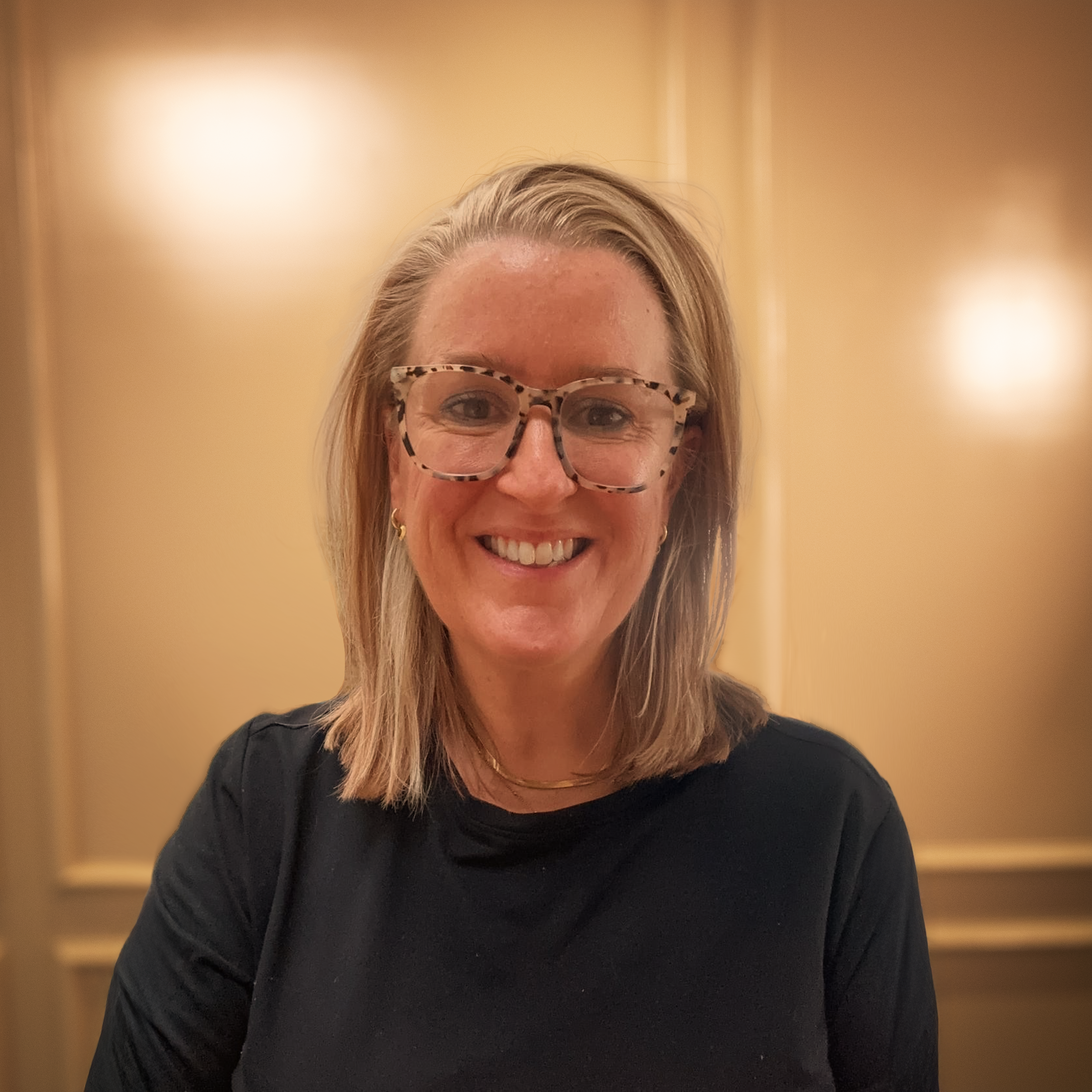
Talent Talks: Franziska Marshall
Introducing Talent Talks, the podcast where we dive into all things talent in the real estate, construction, and infrastructure world. From the boardroom to the building site, we’ll uncover the stories, insights, and people shaping our industry today. We shine a spotlight on data centres, one of real estate's fastest-growing and most in-demand sectors.
In this episode, Sarah Davenport, Managing Director at Capstone, and Oli Coote, Data Centre and Real Estate Sector Lead, speak to Franziska Marshall, Senior Project Manager of Data Centres at Buro Four. Franziska's journey is compelling, spanning a background in real estate and construction from her start in Germany to completing a degree apprenticeship as a Project Manager at Turner & Townsend in the UK. She shares her transition from working on flagship construction projects to the fast-moving world of data centres at Pure Data Centres. Marshall also discusses her transition into a role focused on sustainability at Pure, and highlights her human-centred mindset as a mentor and mentee in the Capstone Mentored community.
Watch this episode on YouTube:
Listen to this episode on:
You can read the transcript of the conversation below:
Sarah Davenport
On today's episode of Capstone's Talent Talks Podcast, we are delighted to welcome Franzi Marshall, who is Senior Project Manager of Data Centres at Buro Four, based in the UK. Franzi's journey is compelling, from a strong real estate and construction foundation to the fast-moving world of mission-critical and data centres. She's not simply managing projects; she's driving them with a human-centred mindset, aligning engineering rigour and sustainability goals. In addition to all of this, Franzi is a valuable member of our Capstone Mentored community as both a mentor and a mentee, helping us support and mentor the next generation of talent in our industry.
Franzi, welcome. Thank you for joining us. How are you?
Franziska Marshall
Thanks for having me. I’m good, how are you?
Sarah Davenport
We are great, thanks, and we're really looking forward to this. One of the things I love about you is the unconventional route you've taken to enter the industry. When I've spoken to you in the past, it's really struck me how much determination and guts it must have taken to do that. So, can you give us a rundown of how you've ended up as Senior PM of Buro Four and the journey in between?
Franziska Marshall
I ask myself that question quite a lot actually. I think I’ll have to go back a long way back for that, because that is all part of the journey of ending up in the construction industry, and then in the data centre industry.
I grew up in Germany, did my pre-university education there, and did an apprenticeship in a completely different industry. And when I finished that apprenticeship, I just didn't quite feel like that was the end of my education, and so started a degree apprenticeship in the UK. That's what got me on the island in the first place, which was with Turner & Townsend at the time, as a Project Manager. And that's how I kicked off my career in the construction industry. Before that, it was a mix of aerospace, and whilst I was doing my A-levels, I was working in a bakery. So, if you want to put that onto the CV, some of those skills have come in handy, but others haven't so much.
Sarah Davenport
The pretzels!
Franziska Marshall
The pretzels, yeah, they're always appreciated in the office!
Sarah Davenport
Absolutely. So, what made you choose the UK, and what made you choose construction? A lot of people watching are looking to get into the industry, so how did you get your apprenticeship at Turner & Townsend? Did you always want to come to the UK?
Franziska Marshall
I've always liked the UK. I've spent some of my school holidays over here, living with host families, and I love the language, the culture, and the people. Working in the UK is quite different to Germany, which I obviously only found out later. For my personal preference, I quite like the work culture in the UK.
As with everything, it has both positives and maybe things that you don't enjoy quite as much. So, I've always had that idea of ultimately studying in the UK, and then I stayed after I completed my degree.
How did I end up in the construction industry? At the time, there weren't that many choices for degree apprenticeships, to be honest with you. I think what's really good is that that's changed. There are a lot more opportunities now. When I was looking at the time, there were probably about 10 that piqued my interest, and to be honest with you, that was a bit of roulette that happened there.
I’d never heard of Turner & Townsend before, and just thought it would be a good opportunity. In my head, I saw that this was going to be the one apprenticeship that gave me the most opportunity to develop, to grow, and build a career around that. And that decision has turned out to be correct. So, it was pure luck, really, ending up in the construction industry.
Oli Coote
It's interesting, isn't it? Because we sort of find that there are these moments in everyone's career where you've got a path and there’s a fork in the road, and you decide to take a certain path.
So, with the people that you were speaking to and thinking, "Look, this is kind of what I'm thinking of doing, and there's Turner & Townsend," did you speak to anyone there, or did you get any advice or guidance on things like that to actually commit to that decision?
Franziska Marshall
Yeah, I remember distinctly that there was another programme I was looking at that was sort of my favourite at the time, and I was really hoping to get it, and I didn't get it. The opportunity at Turner & Townsend came around later, and I remember I was really disappointed. I think we've all been there. We can all relate to that moment when we've a vision in our head, and we want one thing to happen, but in this case, you receive a rejection, and you think all your plans are destroyed, and you're never going to find anything you like. And as it's turned out, a lot of the time, one door closes and another one opens, and that's exactly what it was.
How did I make that decision? Mostly by talking it through with family and friends. At the time, I was quite junior, and so the whole idea of what a project manager does? I had no idea. I didn't really know what to expect, if I'm being quite honest. And still to this day, I'm sure my parents won't mind me saying that. But I grew up on a farm, so you see what you've achieved by the end of the year.
And so, it's quite an abstract role for people that aren't in the industry. Especially for someone who's looking to start their career, I think it's really important to explain things to someone who doesn't or hasn't necessarily had that exposure to the world of work as we all know it, really.
Sarah Davenport
Yeah, I think historically when you're looking at real estate and construction, certainly in the UK, there was a lot of nepotism. You know, it's my father was a surveyor, and my grandfather was a surveyor, and so I'm going to be a surveyor. It was like an obvious path. And what we're super passionate about, as well as many other advocates, is opening up the industry and lifting the bonnet on actually how people get into the industry, where it's not an obvious route. And part of that's making it visible, but the other part is talking about it like this.
How was your experience at Turner & Townsend? I mean, what a great business to start your career in. How did the mentoring work? How did the projects work? What were the challenges?
Franziska Marshall
The first project that I worked on at Turner & Townsend was Chelsea Barracks, which was huge in many different ways. The project itself was quite huge as well, but the experience, retrospectively, more so. At the time, I didn't really appreciate it.
The one thing I noticed, which is when I moved to London, is that when I mentioned the project to anyone in the construction industry, people knew about it, and I just assumed that was normal. It turned out to be the flagship project for high-end residential development at the time, and I think obviously it's still ongoing, it’s iconic really.
Chelsea Barracks, Turner & Townsend, the people I worked with, and one person in particular, whom I won't mention by name because I think I might embarrass him if I do, have stayed in the background at times, and at other times have served as line managers. They’ve been super important to me in my career from a mentoring perspective.
But also, I think people have seen potential in me before I recognised my own strengths and value. And that was probably one of the most important things for getting me to where I am now. You need, especially early on in your career, people who recognise potential and push you, but also push for you.
And so, I've been very, very lucky to have that really throughout my career, but particularly with my manager here, one of my managers at Buro Four, who I've had the pleasure of working with for a really long time. Again, sometimes more in the background and sometimes more present. But yeah, that's definitely a key element of success in terms of my career journey.
Oli Coote
Isn't that great? You kind of make that decision to move into Turner & Townsend, and you're fortunate enough to be working on a great project. But then, you have people who come into your working life that actually really help drive things forward with you and for you, and in some respects, with advice and all of that mentoring and so on.
Franziska Marshall
Massively. Yeah. And I think you learn a lot from those people as well in terms of how you work with people and how you retain talent ultimately. But also, that sometimes you just need to let people go and trust the process. We shouldn't just build people up to a certain level, and then sometimes they have to find their own way; that's what I did. After Turner & Townsend, I went to Pure Data Centres, which was again a fantastic opportunity for me, offering numerous excellent opportunities.
Moving from the pre-construction team into sustainability, which sat under the technology hat. Again, there were fantastic people in there that taught me not just technically so much, but also helped me to grow my confidence massively in terms of just believing that, it doesn't really matter what the challenge is, if you look at something and you really have no idea where to start, which happens more often than you think, you figure it out.
And that comes down to confidence ultimately. And I think that's really something that I've learned over the last few years, to believe in myself. And if you have people who believe in you before you get to the point where you can do that yourself, that's helpful. It just gives you a bit of time to grow and gain confidence.
Sarah Davenport
That's great, because you need that confidence in order to move (from Germany), and by the way, what a project to start on. Coming over to a new country, a new career, and you're thrown into Chelsea Barracks, I mean, that's unbelievable.
Presumably, that helped underpin your confidence in going into a brand new, extremely fast-moving, completely different industry that is data centres. How did you find new mentors within Pure, and what sort of things were you working on? How did you tackle all of that? Because that's super interesting as well.
Franziska Marshall
To be honest with you, I didn't know much about data centres at all when I joined Pure. I joined Pure in, I think September 2022, don't quote me on that date, so a few years ago.
Sarah Davenport
That's exactly when you started, yeah.
Franziska Marshall
Good, so I know my own CV, that's positive! Pure has grown massively over the last few years and was really quite small when I joined at the time. And it's obviously still in comparison to other data centre developers, you have that central team in London, people know each other, which helps massively when you deliver projects.
But when I came into Pure, I didn't know much. I knew some things, but not much about data centres. But I had the luxury of having real industry experts at hand, physically in the office. I would have people on ICT security sitting next to me, I would have the Chief Technology Officer on the other side, and the same with all the other disciplines. And the amount of knowledge that I picked up just by being in close proximity to these people with what seemed to be endless knowledge, really, to be honest with you, was valuable.
Now I've grown to love it, and it sounds a bit funny, but I do love working in the data centre industry. I love it. I think it's great. It's very different to commercial development, what I did beforehand. But I think at Pure I discovered that actually I'm really good at finding that sweet spot between ultimately what's construction and operations, which is so different to residential and commercial development. Obviously, also a consideration, but far, far more important in the data centre industry.
I did have a mentor at Pure DC, which was helpful, and I’ve had unofficial mentors throughout my career, but the first official mentor I've ever had has been through you guys.
Sarah Davenport
Oh really? And how's that been?
Franziska Marshall
Amazing. I have to laugh because when I met Barbara, my mentor, it was probably about four weeks before I joined Buro Four, so I'd already made the decision to move on, and it was the first time we met. So, it was a general conversation, and what got her into mentoring.
And she said at the time, any career move she's made, she tried to look at, I think it was four or five criteria that she'd selected, and she tried to never change more than two. I think it was level of seniority, if you move to a different company, a different business, a slightly different discipline, different geographic locations.
I think that was the four criteria that she identified for herself, and she said don't change more than two because it's quite a lot. And as she said that, I was thinking of a different company, back from sustainability into construction and working in Germany. So, I was thinking, “Did I just make a massive mistake?”
Sarah Davenport
“Did I listen to what she said?” But still data centres, still data centres?
Franziska Marshall
Yeah, it's still data centres, so I kind of hung on to that. It's turned out to be a very good decision. I'm really enjoying what I'm doing here, and it really allows me to do what I'd like to do at this stage in my career. But yeah, it was funny, but I think that was great advice.
I can't take the credit for it, unfortunately, but I think for any move you make, there's a certain level of confidence and assurance that you get from knowing the things that you know, whether that's the company, whether that's the discipline. And whether you've worked in this country before. I think if you do change too many things, it can be a bit overwhelming and just a little bit more stressful to figure things out.
Sarah Davenport
Yeah, it adds the pressure, doesn't it? You know, if you go in, you want to be able to add some value pretty quickly whilst you absorb the new stuff.
Franziska Marshall
100%. Exactly.
Oli Coote
And when you made that move to Pure, because we talk a lot about trying to bring transferable skills and experience into the data centre sector, because we need to try and bring more people in to deliver on everything.
From a more technical perspective, how did you find that transition? I know you were surrounded by many good people. But your experience at Turner & Townsend and then making that move to Pure, more from a sort of technical perspective, how did you find that transition?
Franziska Marshall
I think obviously there was a lot to learn. In the data centre industry, there are a lot of abbreviations that you need to get your head around. So, there was a cheat sheet that came in very handy.
I found it quite interesting. I really like learning about new things, especially if I deem those things to be useful for my job. I think that's the key thing. If I feel like I need to know about something because it allows me to do my job better, then I tend to absorb that knowledge quite quickly. I think for someone who's moving from a different sector into data centres, there are certain things that are useful to know. I think there's a general knowledge of data centres that you need a bit of a general understanding. I do think it can be a little bit difficult to acquire that sometimes.
Again, I had the luxury with my role in sustainability that I did, of working for someone, my line manager at the time, who'd been in the data centre space for a really long time and knew everything that is really to know, in my view. Even the link back from operations, how you implement, in our case, sustainability into operations and in data centre terms, that means efficiencies. Everything is driven by energy, and that really allowed me to understand quite a lot that I probably wouldn't have had the chance to learn if I had stayed in the construction team, or I would have acquired that knowledge much later. And that is something that comes in really handy now on one of the projects that I'm working on.
At the same time, I would say no one knows everything, and I think you do pick up a lot of things as you go along. There are a couple of training sessions that Microsoft has released on what data centres are and how they work.
Sarah Davenport
I was looking at those with the Data Centre Academy. I was looking at those this week myself, actually. They are really brilliant resources.
Franziska Marshall
There's some really good stuff that's out there that everyone can access. But at the same time, don't stress, you'll figure it out. Don't feel like you need to know everything that is to know about your PUE and WUE and all the things that fly around. So that's the other piece of advice.
Oli Coote
It's interesting, you mentioned curiosity there, and that kind of wanting to find out more and learning. And it seems like a big part of it as well for those people who are transitioning into the space, because things are evolving so quickly. It's really helpful if you do have that kind of open mind, that you are curious, you want to find out more, because there are just all of these problems that are constantly being challenged with, which I guess you would be on any kind of construction project.
But within DC, it's even more pronounced just because of the evolution that's going on. So, it seems like those sorts of things are also pretty valuable as well.
Franziska Marshall
Yeah. And I think there's a big difference between which project you're working on in the data centre industry. And I'm a project manager; I don't need to know all the details in terms of technical design. You need to have an understanding. You need to have an overview, but obviously, there are different pressures on specific disciplines with emerging technologies and how that gets translated into design from a technical perspective.
But it's our duty as project managers to keep an eye on those things and say, “Hey, I've seen this, why are we not doing that in a different way than how we thought we were going to do it?” And that's what I'm interested in, to ultimately take those challenges and pass them on to someone else! No, I'm just kidding. It's really important for us to keep an eye on the bigger picture of legislation. I'm sure people have mentioned that in the podcast, especially in Europe, on the European Energy Efficiency Directive.
Again, I'm working on a project in Germany at the minute, where you have to deliver a job in line with legislation, which is quite exciting for a project manager. It's a bit of a nightmare for a data centre operator. But for me, it's great because you can really educate, and that is a very operational-focused legislation that you need to understand in order to deliver your construction project. That's where things get really interesting for me.
Sarah Davenport
So, tell us what you're working on, to a degree. At the moment, in terms of the locations. How is it working back in Germany? And how's all of that been?
Franziska Marshall
Yeah, I've never worked in the construction industry in Germany, so it's a bit of a first. And it turns out that my German data centre construction vocabulary is a bit rusty.
Sarah Davenport
Really?
Franziska Marshall
It is, it is actually. It's quite scary how much, because it's a lot of technical knowledge that I've just never learned in German. So, I'm on CoPilot a lot, asking how you describe certain things in German, which is weird, because I remember the times when I did that just the other way around.
Sarah Davenport
The reverse, that's incredible.
Franziska Marshall
Yeah. We're very lucky because we've got a local partner that we're working with in Frankfurt, whose construction vocabulary in Germany is excellent. So, I can lean back on that. But yeah, working in Germany is exciting. It's very international. Particularly in data centre hubs around Germany, you do get a lot of teams from across Europe that really stay there for the project and then move on, which is quite intense and unique, actually, in the construction industry.
Working in Germany is fun because I’m rediscovering my German work personality again. It’s almost as if I’ve developed everything I am at work in the UK, and all of a sudden, you use a different language, and it impacts a little bit the way that you operate.
So, language is part of your identity, and if you have to switch it, I know it impacted me quite a bit. I didn't really expect that, but I'm getting my head around it. I've got a really, really good client with whom I have a great relationship, so I'm very lucky in that aspect. I work quite closely with an operations team out there who are a mix of German and English speakers. So, I can do a bit of cultural translation there as well, which is always fun.
So yeah, so that's one project. It's an existing data centre. I've just mentioned operations, which is where that sustainability and operational knowledge that I've gained at Pure comes in very valuable.
And then I've got the perfect balance to that, which is a new build data centre project in the UK. As I think with everyone, unfortunately, I can't say too much on that, but it's a really, really exciting project. So, the complete opposite is that I have an operational project that is undergoing works, and I haven't even started on-site, which is very early days. So, it's a good contrast in terms of projects that I'm working on.
Oli Coote
That's great to have that balance, isn't it? Just have those two, and equally across different locations as well. So, I'm sure there'll be bits that you can kind of feed into both if you see what I mean, from knowledge and experience of what you're working on in Germany. Maybe even from a legislative point of view as well. But there could even be things that kind of come across in terms of best practice.
Franziska Marshall
Yeah. And I think when Sarah was asking before, when people transition from a different sector into the data centre industry, particularly in the UK, getting planning works is a process that you learn on a project, and obviously it's different with each client, with each project.
So, sometimes I think moving from a different sector isn't quite as scary as you may think. It depends on the stage of the project. But especially early planning upfront, your civil works, obviously, things are very specific to data centres, but there's a lot of knowledge that you can transfer. The fit-out, replacements during operations are more specific, and that knowledge comes in handy, but especially for new build projects, there's a lot of knowledge that you can transfer purely from a construction perspective. Some people may disagree. That's just my personal opinion.
Sarah Davenport
I think if you are dealing with the fit-out, retrofit, or refurb, whatever you're doing, in an operational data centre, that's got to be valuable when you're getting involved in the pre-con stage of a new build because you know what works. You know what doesn't work.
But also, I think in the context of the rate with which things are changing at the moment and the length of the regulatory stage in the UK, a five-year project could be three years. So, you know what you're going to need in five years is constantly changing anyway. But I suppose that poses challenges as well as excitement and opportunity.
Franziska Marshall
Opportunities, definitely, you've just summarised it perfectly. So, I think there's a lot changing in terms of legislation and regulations; there's a lot that has emerged over the last few years. And it's quite difficult to get your head around it and, more importantly, remain up to date, especially for data centre operators. There are really a lot of nuances to compliance, and I think there will continue to be a lot of nuances.
And especially again, there's a lot of it that is driven by sustainability, which is good, but also some of the targets are set with a political agenda and sometimes not as easy to incorporate. Again, things like PUE targets, and power usage effectiveness is a good KPI, but it doesn't necessarily tell you that your data centre is very sustainable. It’s effectiveness, not efficiency.
And a shout-out to Max from the Swiss Data Centre Efficiency Association, who've done quite a lot of work over the last few years to educate people, including myself, on what PUE really means and its drawbacks. They've got some great tools that are available for everyone.
So yeah, there are a lot of nuances to that. And we've seen changes over the last year or so from a political agenda, when it comes to climate financing and investment, and that's the driving factor. If there's more investment into projects that pursue sustainability, that will ultimately drive legislation and the translation into how we build and operate. But there are always two sides to the coin. So yeah, it can be quite challenging for operators.
Oli Coote
It's quite creative, it seems, in terms of the solutions that people are trying to find from a sustainability perspective as well. I think, particularly in the DC space, there are lots of stories here and there of these initiatives that are really impressive, and if they start to filter down through to other buildings and in the construction sector, I think that's going to be really interesting. But it's just interesting, the evolution of the tech side of data centres, but then, actually, on the other side of that, you've got the sustainability piece.
Franziska Marshall
And there are so many different aspects that you can look at: How do you construct? The material selection, the design elements moving into the technology space, efficiencies in the design, and then how you operate your data centre based on the IT load that you have. So, it's really hard to incorporate everything. It's quite a big challenge. I think the design teams out there have got quite a lot of work to do on that, or are doing on that. And a lot of good work in terms of incorporating those requirements. So, it's definitely the more difficult job.
Sarah Davenport
Yeah, it's keeping up with the pace as well, and the demand on all of that, which is just constantly increasing, isn't it? We were talking to Isabel Kemlin earlier this week on a podcast, who is Vice President of the Swedish and the European Data Centre Associations, as well as an Innovation Lead for the Swedish Research Institute into sustainability and all sorts. They've got some really, really interesting projects going on, and they're working across industries, across the entire kind of ecosystem. So that was super interesting to hear about what they're doing.
So, if we look at somebody listening who's in the early stages of their career or looking to move into data centres, and I know that you're saying that you love it, Oli and I do as well. We obviously come from a traditional kind of real estate and construction background as well, covering lots of different asset classes. But we've got a particular soft spot for the data centre piece, and Oli obviously heads up that side of our business.
But from your perspective, what is it that is exciting or that keeps you in that sector that other people can learn from and lift the bonnet on, as it were?
Franziska Marshall
I've been really lucky with the people that I've worked with, and I don't want to put a negative picture on any other sectors because there are great people everywhere. But for me, it's really been the people that I've worked with. I've been really impressed with the data centre industry, and I think that if you look at the events happening, there's a lot going on around inclusion as well. This is particularly important, especially if you're junior in your career, as you need to feel included.
There's a whole background thing and gender element as well. And I think, comparing it to Germany, the UK is way ahead of Germany in that aspect. But I think when you're starting out, you want to feel included, right? You don't want to feel like the junior person who's just started, and everyone knows more. And you will feel like that. I think we've all felt like that. But I think the data centre industry is extremely good with all these forums that are there. There's something there for everyone, which is really inspiring. I think there are a lot of inspiring people in the industry.
And I think the data centre industry has attracted a lot of talent over the last few years because these are quite complex, fast-moving projects. So, a lot of people who used to work in different sectors have transferred into the data centre industry. Again, there's also a lot of talent elsewhere. But I think what that means is that you do, in an industry that is growing rapidly and has already grown rapidly, get to work with really clever people who are real leaders in their fields. I think that's what inspires me from a people perspective.
I think secondly, I quite like change, and I quite like the challenge of “Why are we doing that, or should we not maybe look at things differently?” And I think the data centre industry is unique in the construction industry because it doesn't just allow you to do that. You have to do that in the data centre industry because if you just keep building your data centres the way you did 10 years ago, then as a data centre operator, you're probably going to slowly but surely go out of business.
And I think that's one of the main issues in the construction industry, that it's very slow, responds very slowly to change, and the data centre industry responds very quickly to change. Now, obviously, that brings stress with it; it's a high-pressure environment. I think a lot of construction jobs are, but I think at the same time it's quite exciting. So, those are probably the things that excite me about data centres and the data centre industry, and that's how I would try to sell it to someone who is thinking about moving.
Oli Coote
I think everyone in the DC space talks about the people and actually how great everyone working in the space is in terms of the communities and all of those initiatives that are going on there to try and bring new people into the sector, and actually just bring everyone together. I think with the communities there, everyone is just really engaged. And I'm not saying in other aspects of the built environment people aren't necessarily, but I think you really feel it, actually, in the data centre space. There are many great initiatives out there, including communities and events, and all that sort of thing.
And as you say, everyone wants to include everybody, which is great. So that's really inspirational. Then you match that with you saying with the kind of innovation and everything that's involved in that, in terms of trying to create the right spaces to support the evolution of the sector, it's amazing. Those two things you mentioned there are exciting.
Franziska Marshall
And I think one of the drivers or one of the reasons behind that is because a lot of people have moved into the data centre industry relatively recently. So, they went through that journey of maybe not knowing so much about the industry and someone being there who includes them. And I think if you've gone through an experience, it's much easier to relate that experience back to someone else, right? And I think that's probably one of the key things, that there's a lot of transitions that have happened, people have gone through, and then they want to help other people transition as well.
Sarah Davenport
Yeah, I think that comes back to mentoring and that kind of future-proofing the talent pool.
Franzi, we have absolutely loved this discussion. Thank you so much. It's been really interesting. I was also completely blown away by the fact that you almost had to relearn German in a different way when going back to your native roots. So that's amazing, but you never think of things like that. So that's been really, really brilliant to share.
Thank you so much for your time, your insights, and for being part of our mentoring process. Selfishly, that’s been really valuable to our community. So, thank you for all of your efforts.
Oli Coote
Thank you, Franzi. That was brilliant.
Franziska Marshall
Thanks for having me on, guys.
That was a fascinating conversation with Franziska Marshall, Senior Project Manager of Data Centres at Buro Four. Her compelling journey, spanning an apprenticeship in Germany and a start in UK construction via a degree apprenticeship at Turner & Townsend, provided a significant view into project management and embracing an unconventional route into the fast-moving, mission-critical sector. We are extremely grateful to Franziska for joining Sarah Davenport and Oli Coote on Capstone Talent Talks.
Related Insights
\\