

Talent Talks: Dame Dawn Childs
Introducing Talent Talks, the podcast where we dive into all things talent in the real estate, construction, and infrastructure world. From the boardroom to the building site, we’ll uncover the stories, insights, and people shaping our industry today. We shine a spotlight on data centres, one of real estate's fastest-growing and most in-demand sectors.
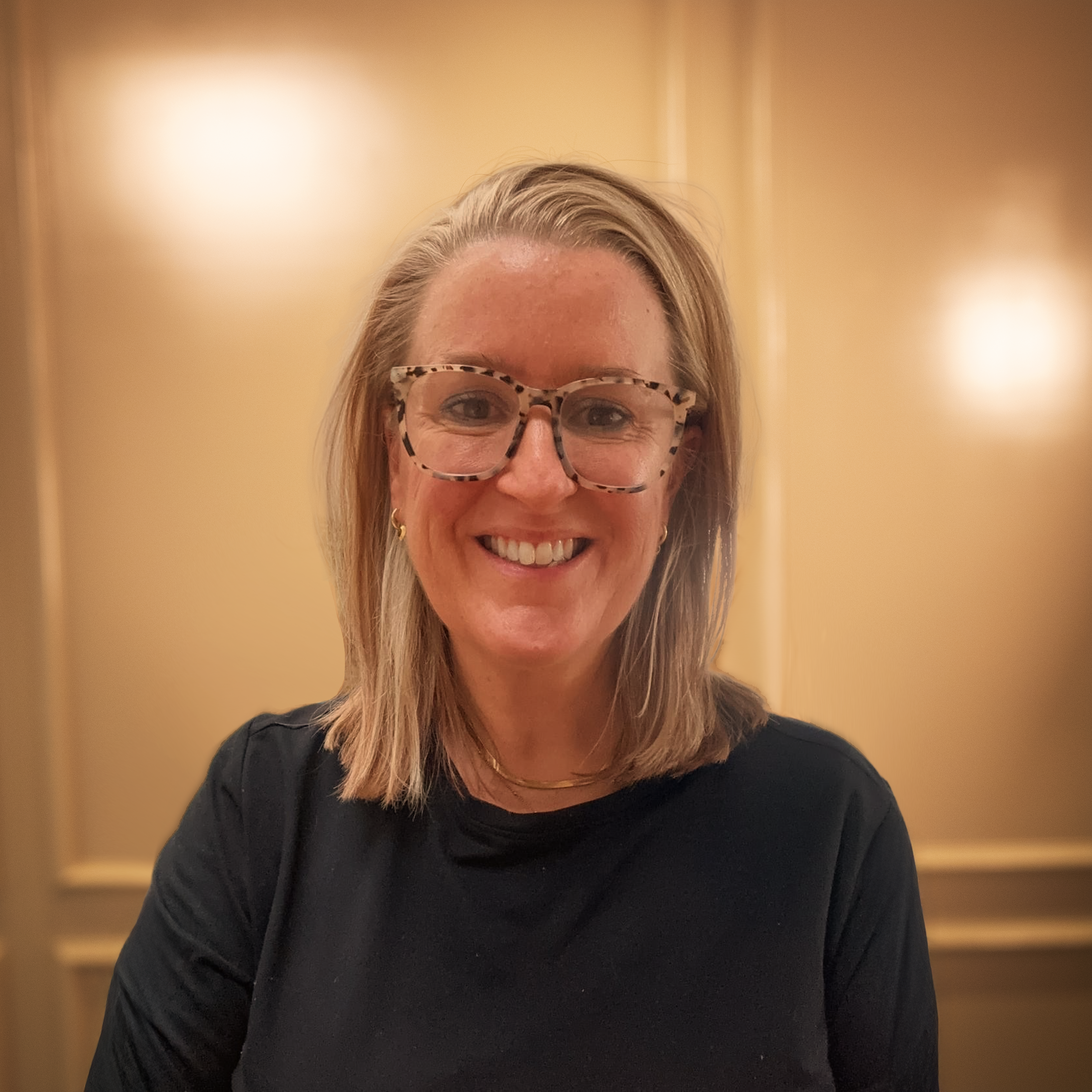
In this episode, Sarah Davenport, Managing Director at Capstone, and Oli Coote, Data Centre and Real Estate Sector Lead, speak to Dame Dawn Childs, CEO at Pure Data Centres. Dawn shares her unconventional career journey from the Royal Air Force to critical infrastructure roles at Gatwick Airport, and National Grid, before her unexpected move into data centres four years ago. She discusses her transition from COO to CEO at Pure during a period of rapid growth from 12 to 300 employees, building diverse teams with transferable skills from other sectors, and championing sustainability initiatives alongside her commitment to attracting new talent into the industry.
Watch this episode on YouTube:
Listen to this episode on:
You can read the transcript of the discussion below:
Sarah Davenport
On today's episode of Capstone Talent Talks, Oli and I are joined by Dame Dawn Childs. Awarded a damehood for her outstanding services to engineering, and with a career spanning major critical environments in the military and the civilian sectors, Dawn is a driving force in the data centre world. A passionate advocate for engineering, leadership, and diversity, we'll be exploring her career journey, the impact she's having on our sector, and the issues she's determined to move forward. Dame Dawn Childs, thank you so much for joining us.
Dame Dawn Childs
My pleasure.
Sarah Davenport
So, let's start at the beginning. Why engineering? And maybe you could tell us about your career and the movements that have underpinned where you are now.
Dame Dawn Childs
Of course. I always feel slightly concerned when I describe why I chose engineering, because it doesn't feel like the right motivation. But when I was at school, I was a typical sort of girl who was good at science and maths, and looking to go to university. I was the first of my family to seek to do that, and my parents were quite clear that they couldn't afford to send me to university. It was a grant system at the time, and they said, "No, no, we can't subsidise that". So, I was looking for a course that would allow me to get a sponsorship, and engineering courses were, by far, the courses that were sponsored by the majority of companies, and attracted the most funding. And that led me to my first career choice, which was literally whoever would pay me the most to go to university, which was the Air Force.
Sarah Davenport
Amazing. So, how did that come through in real terms whilst you were at university? Did you get lots of practical experience as well, or was it very much the funding element?
Dame Dawn Childs
So initially, it was the funding element. But I embarked on what was a really full-life career without really realising it, although the contract should have really told me. Effectively, they did cadetships at the time, which they no longer do, they do smaller scholarships, but this was a full career cadetship. And effectively, they would pay for you to go to university. So you joined the military, the Air Force in this case, before going to university, they sponsored you throughout, and then you signed up for a permanent commission, which at the time was to either age 38 or for 16 years, whichever was longer. I went to university slightly early, so I was only 17. So effectively, as my mother pointed out, I'd signed away 21 years of my life, which was longer than I'd lived.
Sarah Davenport
Wow. And did you think that through before?
Dame Dawn Childs
Not really.
Sarah Davenport
You don’t always have the foresight at that age.
Dame Dawn Childs
Well, no, you don't. But in my sort of rather bizarre 17-year-old befuddled brain, I'd kind of got an answer for my mum, which was at the time the military contract said that if you're a woman and you became pregnant or started a family, you'd be thrown out and you'd have to pay back all of the money. And so, my reasoning to my mother was, "Well, it's okay, because although you think I've signed up for 21 years, if I don't like it, I just fall pregnant and they throw me out". Anyway, my mother wasn't so pleased with that either.
Sarah Davenport
And there's the rationale of a 17-year-old mind.
Dame Dawn Childs
Indeed, indeed.
Sarah Davenport
So, how did the career span then? I mean, it’s obviously really interesting in what you’ve achieved and the positions you’ve held. Talk to us about that first foray into work and engineering in real life.
Dame Dawn Childs
So, the military is fantastic for giving you a really deep and broad set of training and set of skills. I very much enjoyed the whole system. You just worked your way through, and in the early years, you moved through jobs fairly quickly. The longest time, in fact, for my entire 23-year career, I stayed in a role, was two years. So, moving every couple of years into new roles, different roles, you learn how to navigate between jobs with that really constant theme of the military behind you. But you also learn how to pick up new skills quickly, how to lead, etc. So, I really enjoyed my time in the military, and to be honest, I wouldn't have left. I could have aspired to be a sort of Chief Engineer, because in my early career, I'd been the aide-de-camp, effectively the assistant, to the then Chief Engineer, a gentleman now sadly passed, called Sir Colin Terry. And I thought, "I'd love to do that job". So, from then on, I was pushing to try and achieve that. And it became clear to me when I got to and kind of got stuck at Wing Commander, where I didn't get the promotion as quickly as I was expecting, I realised I'd been effectively career-ceilinged in the military, and I chose to leave.
Sarah Davenport
Did you have clarity on what you wanted next, or was it that your aspirations didn't meet the reality of what the military could bring?
Dame Dawn Childs
It's absolutely my aspiration. So, I had no clarity as to what I was going to do when I resigned, because I'd served my past age 38, so I'd met my commitment. And I was at the point where you could put in your resignation and then serve your remaining time, another six months. I did that, and I had enough in amassed leave to pretty much leave within two weeks with absolutely no plan whatsoever other than maximising my potential because I thought, "No, no, I can't stay in this rank for like the rest of my working life. I'll feel like I haven't tried hard enough". So yeah, I chose to go and try to find another path.
Oli Coote
And how did that feel, after going from school to university and then into the military for quite a period of time, to take a step away from that into the wider world? I appreciate all the experience you gained in the military, but how did that feel in terms of pastures new?
Dame Dawn Childs
Super scary, because for the first time in my entire life, I was leaving a structure. There was suddenly no structure and no plan. I looked for new job roles and I made a very deliberate decision to seek a lower-level role, because I was very conscious that the military context and the way you operate in the military is very different to civilian business. And I didn't feel sufficiently equipped to navigate civilian business. So, I was applying for lower-level roles. And literally the first one I applied for, I got offered, and it was for a senior engineering manager at Gatwick Airport. And I can remember the interview because I was kind of mad. I was angry that I hadn't achieved what I wanted to in the Air Force, so I had a little bit more gusto and perhaps a bit more confidence than I would normally have. In the interview, the then Head of Engineering said, "You seem to be overqualified for this role", and I was amused. "Why have you applied for it?" he asked, and so I said, "Clearly, I should be applying for your role, but it's not available. So, I thought I'd come and, you know, figure out civilian business in this lower level".
Sarah Davenport
Brilliant.
Dame Dawn Childs
He laughed, fortunately, and offered me the role. And then the day I turned up at the airport, he told me that he was moving sideways to be the Head of Security, and that the Head of Engineering role would be available should I wish to apply. And I had, probably, a couple of weeks to figure it out.
Sarah Davenport
Wow, that's good timing.
Dame Dawn Childs
It was good.
Sarah Davenport
Maybe you sowed the seed?
Dame Dawn Childs
I don't know. It was very scary though, it was sort of like slight panic. It was “Oh my goodness, I now need to learn all of this stuff in two weeks”, because in the Air Force, I mainly looked after aircraft and engineers maintaining aircraft. And for this job at Gatwick, it was the airport. So, it was civil infrastructure, which I'd never looked after before.
Oli Coote
Does the military prepare you for that, in terms of having to adapt quite quickly to a situation?
Dame Dawn Childs
Completely, completely. I described moving every two years. Well, put alongside that, going out to operational theatres or significant exercises, and you're forever being put into a new context and having to figure stuff out from the ground up and make something happen. So, you get very used to navigating uncertainty to deliver outcomes.
Oli Coote
And actually, in terms of civilian life, and a role outside of the military, that kind of live environment that an airport provides, I suppose it's actually a great segue.
Dame Dawn Childs
Yes, it's operational. And I was very conscious about not moving too many degrees of freedom away from my comfort zone. So, I specifically wanted it to be engineering, to be leading teams who are maintaining things, albeit different things, and also in the aviation context. So, whilst going from looking after aircraft to looking after terminals, lifts, toilets, runways, and all the things that come with an airport might seem slightly different, it was still aviation. I still knew the language, and a lot of things were still familiar, which was helpful.
Sarah Davenport
Yeah. Keep that solid foundation.
Dame Dawn Childs
Yes.
Sarah Davenport
Turn the dial one way.
Dame Dawn Childs
Yes. Not too far.
Sarah Davenport
Yeah, absolutely. And so, tell us about your time at Gatwick. How was your time there, as in your first foray out of the military?
Dame Dawn Childs
It was really good. There were some things that were very familiar: the aviation context, leading people, and trying to bring teams together. There were also some things that were very unfamiliar. The cost savings and the driving efficiencies, that was slightly tricky, although we had just done some lean initiatives in the military, so I had a bit of context, which was helpful. The biggest singular thing, though, for me that stood out in terms of how different it was, was the people. In the military, by dint of the hierarchy and the rank, if you're an officer and you tell people to do something, even if they think it's a terrible plan, they might tell you it's a terrible plan, but they will effectively go and do it. And if they need to have it done by a certain time, they'll have done it by a certain time, or they'll tell you why they can't and give you the path forward to ensure they deliver it. Civilians just don't do that.
For the first few months, I was staggered. I would set all these directions, thinking things were going to happen. Then, when nothing happened, I was thinking, "Why hasn't it happened? You know, I asked you to do this. Why haven't you done this thing?". And people just didn't do it. I had to find a whole new way to lead and to sort of lead through persuasion and through being collegiate and collaborative, very different to military leadership.
Sarah Davenport
How did you take on the responsibility of developing those skills? And presumably that's underpinned success in future roles as well. That is a steep learning curve. It's not the natural way in the military.
Dame Dawn Childs
Completely. But I think I'm quite a people person anyway in terms of knowing what my limits are and understanding my knowledge, and trusting people and valuing them for their experience and their particular knowledge rather than the fact that they're, you know, more senior to me or whatever. So, I think that really helped, that sort of curiosity to understand people and to try and find their brilliance and understand it, and sort of put it into a bit of a tapestry or jigsaw puzzle with mine to enable us to create the best outcomes.
Oli Coote
And did you find there was some support in place for you to help develop in that way? Someone you could, I suppose, look up to, or someone slightly more senior within the organisation that could help direct some of that as well? I mean, you mentioned Sir Colin Terry in the military. Was there someone comparable to that at Gatwick, or was it?
Dame Dawn Childs
And so, to be clear, Sir Colin, I admired the position he'd got to, but not necessarily how he got there, or his leadership style. He was very directive and autocratic. It was a slightly different relationship. But there were plenty of great leaders at the airport, and they were very generous with their time. But I don't think there was a particular mentor, or sponsor, or anybody that worked with me to help me to navigate that. There was a whole kaleidoscope of people who were very helpful and very supportive.
Sarah Davenport
You've got to have a team approach in an environment like an airport. So, let's move on from Gatwick and your next step. What prompted that, and what opportunity did you embrace after that?
Dame Dawn Childs
So, after getting the Head of Engineering role, I just kind of delivered it. And I had aspirations for the next promotion, as you do after a few years. I spoke with the lead from Global Infrastructure Partners, who are still actually investors in the airport, and said, "Hey, how do I look for a board position?" And he was quite clear to me. He said, "I don't really see a female engineer on the board. Yeah, you're not really commercial. So it's a nice aspiration, but it's not going to happen". I said, "Okay, so how do I fill that gap? What do I need to do?" And he said, "You really need to do something more commercial; that's not a Head of Engineering role". I asked, "Okay, well, is there one ?" And he went, "Oh, well, you know, we'll have a think".
And literally the next day he brings me up and goes, "Oh, I've got a great job for you. I'm going to move you to be the Head of Transformation". I thought, "What?”, not really expecting things to move that quickly. So, I transitioned roles at the airport to this Head of Transformation role. But it then became clear that for a sort of board position, it was kind of "dead man's shoes". And any roles that were becoming available really weren't the type of role that I could sort of step into. Ideally, it would have been a Chief Operations Officer role that would have suited me, but that wasn't going to be vacant anytime soon. So I get calls, you know, a lot for different things and normally say no, but I started saying yes to listening to recruiters and headhunters.
And the next week, I got a call from somebody who was recruiting for Merlin. I thought, "What's Merlin?" I didn't know, having not had kids because of the whole military thing that I talked about before, so I had no real conscious idea what Merlin was. "Hey, it's like number two to Disney, it's this massive theme park operator, 130-odd theme parks around the world". I thought, "Oh crikey, okay, that sounds different". And then it dawned on me, and I thought, "Didn't they just have a big thing at Alton Towers?".
Sarah Davenport
This was just after the Smiler crash.
Dame Dawn Childs
It was just after the Smiler crash, and so they were creating a new position, the Director of Engineering role, to consolidate and bring together all the standards and practices across all the theme parks globally. First of all, I said, "No, that sounds too scary and too different", back to staying in my comfort zone. But then, after some research, I realised it's just running engineering and maintenance teams, and it’s all the things that I would have done in the military. So, safety standards and all those sorts of pieces. I managed to convince myself that it would be okay to go for it. So, I did apply and got that role, which was a really brilliant and very enjoyable four years. Challenging, with lots of new stuff to learn, but some brilliant teams. And, who wouldn't want to work for a company that has one of its values as it's all about having fun? And it really was.
Sarah Davenport
After that, was there another ceiling that you reached and therefore a push factor, or was there a pull factor towards National Grid, because I think that was your next role?
Dame Dawn Childs
Yeah, so again, I was sort of aspiring to a board-level role, because the Head of Engineering role sat on one of the sub-boards, but wasn't on the board and never would be. And again, it was kind of blocked. So, I started being more open to opportunities, and the National Grid role came up, which had two board seats at the time because both gas and electricity were covered. And it was leading a transformation, which I'd done at the airport. I'd done some transformation work, and had done some similar work in the military. So, I thought, why not?
Sarah Davenport
And how was that role in the power sector?
Dame Dawn Childs
So it's a very different, very different indeed. And, you know, proper critical national infrastructure. And, whilst an airport might be critical national infrastructure, it's in a single place, whereas the grid's everywhere. So, that was different and an interesting time. And just, a really rich experience to be able to navigate across yet another industry, and look at transformation, and how to improve the sector, and how to move the sector forward.
Oli Coote
And was it a big change moving from, I suppose that commercial environment of Merlin to National Grid, which has a slightly different consideration?
Dame Dawn Childs
National Grid is still very commercial, but in a very different way, and almost at a different speed, because at both Gatwick and Merlin, decision-making was swift. And in National Grid, it was, as you would expect from a FTSE 100 company, or FTSE top 20 as it was at the time, very considered, very specific, and deliberate. And, yes, it sometimes took a frustratingly long time.
Oli Coote
Did that then feel like more of a natural progression through to Pure at the moment, from the National Grid context? That kind of critical infrastructure from a power perspective, through into the data centre world? How did that come about?
Dame Dawn Childs
You make it sound like I had a plan, which is lovely, and I wish I did, but unfortunately, the truth is slightly more stark. So, I had no plan. And, you know, the transformation role at National Grid was always going to be a time-bound role because it was leading a specific transformation. So, when it was coming towards the end of that and I started being more open to approaches again, I got this call about a data centre company. And, my first thought was “What's a data centre company?”
Sarah Davenport
So, I remember making that call.
Dame Dawn Childs
And do you remember me saying, "I don't know what you're saying.”
Sarah Davenport
I remember you saying “I don't know what you're talking about?". I remember because I'd reached out to you, and you returned the call, and I said, "It's an opportunity with a global data centre developer and operator". It went quiet, and then you said, “What’s a data centre?”.
Dame Dawn Childs
Did that not give you a bit of dread, thinking maybe I've rung the wrong woman?
Sarah Davenport
Nobody knew, and I barely knew what a data centre was at the time. You know, because it's invisible, which leads us on to a huge topic of conversation. But it is invisible.
And I think it remains invisible, although to a slightly lesser extent. But the reason that I think you've had so much success, from an outsider's perspective, is that you've come with an outsider's perspective, and we need that. You need that diversity of thought and the different lens as it were.
And obviously you were initially hired in a COO role on the operational side. And since then, obviously, you’ve become CEO. Tell us about it, how's it been?
Dame Dawn Childs
Super interesting. And it's an amazing industry that I'd never heard of, which is incredible. And so, I work hard along with lots of other people to try to improve the understanding of the industry. But the thing for me that I found amazing, you talked about “Did that get you set up right for your transition to data centres?”. If I was planning my career path to get to this point, it was a great plan. It just checked every box.
Sarah Davenport
Foresight!
Dame Dawn Childs
Yeah, exactly. And, you know, my predecessor was very good at navigating pathways and deciding on the sort of the talent he wanted to bring in, and the sort of experience/experiences he wanted them to have. And so, my critical national infrastructure, military, and all the things I had done literally led me here, to be able to hit the ground almost running, maybe crawling in the data centre sector. So, that was amazing, and it's helped me to be equally open to trying to get new talent into the sector. The transition from effectively running ops to running the company was kind of weird, unexpected at the time, although clearly a nice transition.
But it's really important to have the right team. And so, I think whatever role, whatever leadership role you're in at whatever level, it's less about the leader and more about the team, and how everybody's experience complements each other to make a whole. Because, you could have the most amazing leader in the world. If they haven't got the right team around them, they're not going to deliver anything. And vice versa, you can have a brilliant team with the wrong leader, and they just can't get the team on song. So, it's very much a collective effort.
Sarah Davenport
What makes your team brilliant at Pure?
Dame Dawn Childs
I have an amazing team at Pure, and not just the exec team, but all the way through. We've had a couple of transformations along the way, and as the sector has changed, we've had to change with it. But also, we've moved from that sort of start-up/scale-up when you first rang me to join the company, to close to 300 people, a global footprint, and a pipeline of 500 megawatts plus, of data centres. That's a big transition to make, and ensuring that the company grows up along the way, and that the institutionalised processes and everything hit the point that it needs to, is really important.
Getting the right talent in to help us in that journey was very important, and we've been very careful about our team selection, and also making sure that the team works together. You can get odd brilliant individuals, I don't mean the people are odd, I mean individuals who are brilliant, but if they don't sit within the team world, then it doesn't allow you to deliver. So, we've been really specific about trying to build the teams to do what we need to do and trying to find our edge, if you like. We're not just another data centre delivery company; we have a team of very talented engineers and construction specialists who team up with our investment front-end to enable us to unlock capacity in places where other people can't. So, yeah, it's really great.
Sarah Davenport
And you built a clear framework of values that pulls everybody together, but how did you manage that? Because the team that you need for a scale-up is very different to the team that you need for a period of stability. You know, it’s different skills, and you need the foundations, I suppose, from a talent perspective. But you also need very diverse talent in order to deliver the complexity of what you are doing. So, what are the common threads within that?
In fact, we were talking to Sophie Parker, your Head of Talent, on Tuesday. She came on the podcast, and she was absolutely brilliant. I was saying how I was trying to PR the data centre world to my 14-year-old child, and he was like, "Oh God," so I really need to work on this. But I was saying that it would really suit him: he's a troublemaker and a problem solver. And she said, "That's exactly what we need". So, what are the common threads between the diverse talent that you have?
Dame Dawn Childs
I think curiosity, in being able to understand problems and look at solutions. So, rather than the classic thing, which unfortunately I think engineers, and I can say this because I'm one, are good at, which is problem admiration. Standing back, saying, "That's really tricky, really hard. How do we do that?" Instead of doing that, we should really get our sleeves rolled up and understand how to unlock those problems. And that isn't just on the engineering side; it's at the front end and the investment side as well. You see it in the news every single day: there's a new, massive-scale data centre that's going to be built here; they are everywhere. But the reality is, underneath that, they're not always there. So, the amount of work and effort you have to do to unlock it, to get the power, to get the land, to get the permitting, necessitates all of those skill sets and that capability to navigate. And that's before you've even started building.
And then, when you're building, to make sure that you're not late and that you've built to the standard you need, and for the resilience that your customer demands, it takes a whole different skillset. You need people who are very specific, who are really good at managing projects and who are very, very good at checking quality and standards and making sure that everything's delivered to point. And then, of course, the operations need to understand the processes to run that resilient and reliable asset.
Sarah Davenport
I suppose you've obviously come at it from engineering and excelling in the STEM subjects, and I know that you're really passionate about building out STEM choices in education, and at a career level. But, I also think it's important to highlight that there's such a variety of careers within data centres. So, maybe you can tell us a bit about that, so that it's not just, as my child goes, "Oh God, that sounds boring". Because it's not, it's so exciting.
Dame Dawn Childs
Yeah, and that's just the thing. I think you could probably have almost any educational background and find a role in a data centre company. There's literally everything from the sales front-end to the investment analysis, to legal, and to culture support. We have full teams who do analysis, planning applications, etc. There's so much that's beyond just the engineering and the technical side. And when you get to a data centre that's operating, you have administrators, you have cleaners; there's literally everything. So, whatever the level of role, it probably exists in the data centre, as it's an entire ecosystem. I think people just look at the data centre itself and think about the hands-on engineers and technicians without really thinking through any of the broader pieces. To be honest, the data centre sector has got the biggest security sector that I've seen in any other business I've worked in. A significant amount of the day-to-day running of a data centre is the security people on the ground.
So, there's a plethora of roles, and I think it's more that it's not necessarily about us listing the type of qualifications we think you should have. I think it's about any individual thinking about what they're good at and then finding the role or trying to seek out the role that might suit their skill sets.
Oli Coote
It's interesting, isn't it? It's that aptitude piece, and what can we actually bring to the table in terms of mindset? And yes, it might be technical skills as well, but actually, when that comes together as a collective, it helps. That's when things can really change with the diversity of thought, and it actually feeds through to the wider business, whether that's from a security perspective or a very technical engineering perspective.
Dame Dawn Childs
Indeed. Some of my favourite stories are from when we run our apprenticeship schemes. One of the team members, who was a cleaner on one of the sites, applied for a technical apprenticeship and is now training to be an engineer. So, it's getting that crossover within the company. It's just amazing, and it just means that you don't necessarily need to have had all of that educational background before you join the sector. You can navigate through the sector and learn along the way.
Oli Coote
I think things are evolving so quickly in the sector, aren't they? I mean, it seems every single day it's advancing so rapidly. Having that broader experience and skillset, it would be interesting to get your thoughts as things are moving forward, as to what we as an industry can be doing more of to ensure that we continue to attract people into the sector? And equally, what people should be considering, once they become more aware of the data centre industry, in how they can then contribute and get involved?
Dame Dawn Childs
I think it's one of those industries that was just in the shadows. You know, we were talking earlier, my question was, "What is a data centre?”. Shocking! As a senior engineer, not knowing and really understanding this massive sector that's grown up, I say overnight, but over the past couple of decades, it’s extraordinary.
Sarah Davenport
Even when I was working with your predecessor, who was really brilliant about wanting diverse talent and understanding that he needed that in the business, but even he still couldn't tell me where the data centres were because it was secret. And I was saying, "Okay, so it could be on four continents where you could be working". It's a process of elimination. Whereas it's much more open now, I think.
Dame Dawn Childs
Yes, well, unfortunately, some of the openness is driven by negative headlines as well as positive headlines. If we could do a better job as an industry of describing the job roles available and also describing the sector so that people knew, rather than them just being on the phone all the time, or streaming a film service at home and thinking it's some sort of magic trick, they would really understand how the back end worked. They'd think, "Crikey, this is a great industry to be in," because it doesn't just enable everybody's digital future. It could help solve climate change.
AI has so many prospects and opportunities to be used, and there will be a proliferation of data centres as more and more use cases are found, and as it's embraced more. It's already got hundreds of millions of users, so it will keep going. If people understood better that data centres were at the heart of it, and this is a really important sector to be working in, that could solve many of humanity's problems going forward, they'd be more excited about it rather than thinking it was a big grey box that was taking away all the power.
Sarah Davenport
And a drain on the community. It's that legacy piece, isn't it?
Dame Dawn Childs
Well, there are different approaches. One of our mantras at Pure Data Centres is that we believe in “data centres for good”. So, we do a lot of work with the communities. We have a wholly owned subsidiary called Healthier Earth, which is a sustainability arm trying to solve some of the challenges that a data centre has, in terms of that last bit of carbon footprint. They've come up with climate solutions which could literally impact world food production, and will also impact climate change, etc. So, it's now starting to create our own carbon credits, for example. There is a much bigger story to be told, and data centres could be right at the heart of helping to deliver net zero and be a real force for good rather than a drain.
Oli Coote
And I think it's getting better, isn't it? There are some great initiatives in schools, and through higher education, as well. I think there's obviously more to be done so that it becomes far more commonplace in terms of people's understanding around the data centre sector. There’s more to be done, but there are some really good things happening in schools. Hopefully, that does start to feed through, and people start to realise that they can play a part in helping to change things, as you say. And, you know, it's a well-funded industry that they might actually receive a reasonable pay cheque at the end of it as well.
Dame Dawn Childs
Yeah, absolutely. It is an upper-quartile pay sector for sure. And the other thing is, it's not necessarily a tech industry, but people confuse it and think it is. If you're running a data centre company, we don't actually deal directly with the compute that's inside the data centre. The GPUs, the CPUs, the servers, we don't get involved with that. That's our customer's domain. So, you don't need to be a tech nerd to come and work in the data centre industry at all. There are many other things, as we've described, many job roles, and none of them involve being a computer nerd at all.
Sarah Davenport
So let's talk beyond the obvious, which in simple terms is that you've got a big box of a building, and you've got lots of cables in it. And you're the conduit to keeping us all running, operating, working, and communicating, and so on. What is the less obvious stuff? One is actually almost that you don't have to be a tech nerd. Tell us a bit more about the sustainability piece and the community engagement that is more invisible to the naked eye.
Dame Dawn Childs
Yeah, we do all the sort of normal corporate social responsibility stuff that you'd expect any company to do, but we like to take it a step further. For example, if I take our London data centre site near Brent Cross, the next phase of building that's currently going up will be encased in one of the world's largest living walls.
Oli Coote
Amazing.
Dame Dawn Childs
We've been very specific about why that was required. It's because it's next to the Brent Reservoir, which is a Site of Special Scientific Interest. And also, that's one of the most polluted parts of the country, and it's the only place where somebody actually had pollution as a cause of death. So, this large living wall will have planting which has the effect of taking pollutants out of the air and will also significantly enhance the biodiversity in the local region. So, rather than it being a horrible grey box, it will be something that is very additive to the community.
In doing that, we did lots of trial walls to test the planting and test for the use of biochar, to ensure that it didn't need to take too much water and that sort of stuff. As we were doing this, we also planted mini living walls at some of the local schools, and used some of our other sustainability technology called Forest Factory to plant tiny forests in the local community. So, these are initiatives which are all driven by the fact that we have a data centre there, but are giving back to the community.
And it's part of that work that we've been doing to try and get rid of that last bit of carbon footprint that you have to build something. So inevitably, there'll be an irreducible burden of carbon footprint left after you've done the renewable power, done recycling all the waste and then waste to landfill, and all of the other things that you can do to improve efficiency, etc. You always end up with this irreducible bit of carbon footprint.
So, we're creating our own carbon credits to offset that. We use something called biochar, which takes organic waste, pyrolyses it, so burns it in the absence of oxygen, and creates this substrate called biochar, which sequesters carbon for thousands of years, but can also be used as a peat substitute. So, that will be used in our living wall to reduce the amount of water needed by over 50%. It absorbs water. We're also doing trials of that in asphalt and other building materials to help with climate adaptation. Rather than water just running off an asphalt surface, this will actually help to retain water and moisture in the surface. And also using it to do trials with rice growing in paddy fields close to our data centre in Indonesia, to try and increase crop yields with rice. So yeah, there are lots of things that we're trying to do to improve the facilities or the local regions around us and work with the communities.
Oli Coote
It's amazing, isn't it? The cutting edge of the tech revolution, because it's data centres and AI and so on and so forth. But then equally in terms of the sustainability piece and trying to do everything that you can to try and move the needle in that respect as well, it's at the cutting edge of that as well. It's incredible.
Sarah Davenport
What do you think the industry could do in terms of collective impact around talent? When we were talking to Sophie, she was saying she doesn't think there's so much a shortage of talent, but more of a shortage of open-mindedness about talent. And I'm interested to hear your views on how Pure plans to attract and retain. That's the other thing that Sophie was obviously talking a lot about. You don't want the revolving door. You know, it's expensive and it doesn't serve well. So, what can we do as a collective in the industry, as well as individually, do you think?
Dame Dawn Childs
I work with Infrastructure Masons. I'm one of the co-chairs of the people committee, which looks precisely at diversity, inclusion, and also the educational aspects to bring talent into the industry. And I think there are already a few collective initiatives. Some of them are US-focused, something that we can definitely repeat here, and are around apprenticeship schemes that span more than just a single company. Also, educational schemes, reaching into schools and universities and giving them ready-to-train modules about the data centre sector, and awakening young people to the opportunities that there are in the data centre industry for careers. And only by leaning in that little bit more will we get the messaging out there.
Because if you asked a standard 8-year-old about the data centre, they would not have a clue. You know, they might say they want to be a train driver, work in the airlines or something, but they're never going to talk about the data centre industry. The more we can normalise data centres as another big industry that people can go into, the more likely we are to attract the talent.
I also think that there's a secondary aspect that we should be doing, which is looking at career transitioners, because if every industry that's growing, like the data centre sector, there'll be another industry that's in demise. And so, there'll be some brilliant talent coming out of those industries that need to find a new home and a new purpose. And why wouldn't we be taking lots of people from other sectors and figuring out their transferable skills or helping them to figure out their transferable skills?
Sarah Davenport
Absolutely. And is anybody at the forefront of doing that well, or that you think could do better?
Dame Dawn Childs
Yeah. And so, I think there are companies that do reach out and try to attract talent or fish talent from other industries, not necessarily in an all-encompassing way. But I think there are some online platforms out there that will help. And Infrastructure Masons have one which is particularly focused in the military community. Actually, it's called a job matching platform where you sort of type in the skills and things you have, and it goes, "Hey, you could be a this, that or the other." And I don't mean it like, I remember from back in the 80s, they used to have that careers matching platform when you're at school.
Sarah Davenport
What did it say you could be?
Dame Dawn Childs
You could be something, a shopkeeper or something like that.
Sarah Davenport
Yeah, I was a head dresser.
Dame Dawn Childs
Yeah. So definitely not that, definitely not that. Definitely something far more clever than that. But the more AI is being used, and you can get some good understanding and some good data sets behind it, then you can allow some of this job matching so that people with skills don't find themselves abandoned and not able to do anything great in their future, and they can go find a brilliant new career. And I would love for the data centre sector to be going around collecting all of that fantastic untapped talent that's waiting for a home.
Sarah Davenport
And bring the human element of data centres to life, which I think is missing. So, I suppose if we look at your parting words of wisdom in terms of the future of talent and the future of data centres, if you're looking five years ahead, what do you think are the opportunities that we should be embracing or the challenges that we need to consider?
Dame Dawn Childs
I think there's a significant sustainability challenge to enable that beautiful digital future that everybody wants, and to really harness the potential of AI, we need to solve for the sustainability conundrum. So, I think the talent needs are probably wider than we even envisaged at the moment. And I'd love to see that the sector had leaned in. For example, I'm a great advocate for us helping to solve for net zero rather than being part of the problem set. So, leaning in and having solved for that, having data centres providing grid services, having young talent looking at the data centre sector and thinking, "Oh my goodness, that is literally at the core of everything. It's enabling everything that I do digitally, it's solving for all these problems, and it's also enabling net zero because it's part of the power solution position.", rather than part of the power problem. I'd love for us to be that real linchpin industry that young people look at and go, "I'm really excited to go and lean in and help with that industry because it makes a difference.".
Oli Coote
And in terms of advice you might give to people who are just learning about the data centre industry and think actually, this could be something that I'm interested in getting involved with, or even people within the industry at the moment and maybe thinking about their next step. If you've got some advice in terms of, this is what you need to be considering, not from a technical perspective, but more from a mindset or an open-minded approach to looking for that next opportunity.
Dame Dawn Childs
Definitely being curious and being open. So rather than worrying about a specific job title or thinking, "Oh, I want to be an X or an AY," looking at the opportunities, looking at the different companies, because there are so many different companies, even companies popping up all over the place, that there are opportunities everywhere. And, we spoke about the start-up through scale-up to steady running. There are lots of those businesses around, and the skills you need for the scale-up time are different. You might literally be the director of everything for a little while before you then become the director of something more specific. So being open to the opportunities, I think, is a really key element.
I also think that this industry has the greatest that I've ever found. Networking, conferencing, it's endless. So, if you're interested in the sector at all, get along to one of them. Most of them are free. So, you get to one of the conferences, go speak to people, go meet people, and apply to the careers page. Every single company, and of course Pure Data Centres, please look at the website, has a careers pages. There'll be jobs posted on that all the time because the sector is growing so fast. If I think about Pure when I joined, my employee number was 12. We're now 300 people, and I've only been there 4 years. So, you know, the scale of growth is significant. So, keep looking at those job pages, go to the conferences, talk to people, ask people. Everybody in the industry is welcoming. It's the most welcoming industry I have ever worked in.
Sarah Davenport
Yeah, I think we would second that. It's been fantastic.
Oli Coote
Everyone is so engaged. And if you're into running, there's a running club. If you're into cycling, there's a cycling club. If you're into marketing, there's, you know, there's all these whatever you're interested in, there's probably a-
Sarah Davenport
Marching?
Oli Coote
Marketing…although you never know! But there will be a community that's involved in the data centre industry that's into that. It's unlike other sectors of the built environment, for example.
Dame Dawn Childs
Completely. And I often tell the story that one of the first conferences I ever went to was actually in Monaco. I know it's now in Cannes. It was the Data Cloud in the first year that I joined. So, I'd literally been at Pure for a couple of weeks, I think, and I suddenly went over to this conference, and was like a rabbit in headlights. I was petrified. But I was invited on the very first day, like the first thing that I went to a women's networking event. And that was transformational for me. I suddenly met all these amazing senior ladies, and had great conversations. And then, throughout the rest of the conference that had thousands of people in it, rather than feeling like this lost soul who didn't have a clue, there was always a friendly face in the room. It made the biggest difference. And I've never had that before in any industry.
Sarah Davenport
Well, let's hope that's a sign that will trickle through, and it will bring more talent in, because it's less closed and more open-minded. Dame Dawn, thank you so much for joining us. We've absolutely loved it and could go on for another 3 hours, but we really appreciate you coming in and spending some time with us. We’ve recorded eight or nine of these so far, and I think your name has come up in eight or nine of them. So, you are absolutely leading the way with representation in the industry, and we're really grateful for that. So, thank you so much.
Oli Coote
Thank you for joining us.
Dame Dawn Childs
Thank you.
That was an insightful discussion with Dame Dawn Childs, CEO at Pure Data Centres Group. Her journey across military engineering, aviation, entertainment, and critical infrastructure offered compelling insights into leadership transitions and building high-performing teams. She explored how Pure values curiosity and problem-solving abilities alongside technical expertise, showcasing a dedication to assessing talent through transferable skills and diverse backgrounds. Dawn is pushing the industry forward by championing sustainability initiatives, community engagement, and accessibility through educational outreach and career transition programmes. Her focus on collective industry efforts to attract untapped talent is reshaping how the sector approaches workforce development. We are extremely grateful to Dame Dawn Childs for joining Sarah Davenport and Oli Coote on Capstone Talent Talks.
Related Insights
\\